How to Store Cheesecake in Fridge | The USDA’s 2-Hour Rule
This post contains affiliate links. As an Amazon Associate, we earn from qualifying purchases.
Store cheesecake in the fridge by letting it cool completely, then wrapping it tightly in plastic wrap or sealing it in an airtight container. Keep it on a middle shelf where the temperature is a steady 34–40°F. Baked cheesecake lasts 5-7 days; no-bake lasts 4-5 days. Never leave it at room temperature for more than two hours, or one hour if the room is above 90°F.
That temperature window between 34°F and 40°F is where dairy and eggs stop growing pathogens. Go above it, and the clock starts ticking faster than you think.
What follows: the exact shelf lives for baked versus no-bake, the three wrapping methods that actually work, and the one mistake that turns a perfect crust into a soggy sponge.
Key Takeaways
- The USDA’s 2-hour room-temperature limit is a safety line, not a suggestion. In a hot room (above 90°F), that drops to one hour.
- Baked cheesecake outlasts no-bake. Expect 5-7 days for baked, 4-5 days for no-bake in a proper fridge.
- Cool completely before refrigerating. Trapped warmth creates condensation, and a wet cheesecake is a sad cheesecake.
- Fruit toppings cut shelf life. The fruit spoils first, often within 3 days.
- Freezing is a solid option for up to three months, but you must double-wrap to prevent freezer burn and flavor transfer.
Why Cheesecake Demands a Cold Fridge
Cheesecake isn’t a cake. It’s a dairy and egg custard set on a crumb crust. That composition puts it squarely in the “potentially hazardous food” category for food safety agencies. The high moisture and rich protein content are a banquet for bacteria if left in the temperature danger zone (40°F to 140°F).
The USDA states cheesecake should sit at room temperature for no more than 2 hours. If the ambient temperature is above 90°F, this limit reduces to 1 hour.
That’s not a conservative guideline. It’s the documented point where bacterial loads can reach unsafe levels. Your nose won’t tell you. A cheesecake left out for three hours at a party might look and smell fine, but the risk isn’t zero. The safe move is to treat that two-hour mark as a hard stop.
Your refrigerator’s job is to halt that clock. But not all fridge zones are equal.
The Critical Role of Refrigerator Temperature
Your fridge might feel cold, but is it cold enough? The optimal range for food safety is between 34°F and 40°F. Temperatures above 40°F allow pathogens like Listeria and Salmonella to multiply.
Where this goes sideways: Storing cheesecake in the door. The temperature there fluctuates every time you open it, often sitting several degrees warmer than the main compartment. The middle shelf, towards the back, is the most stable, cold spot.
If you don’t know your fridge’s actual temperature, get a standalone thermometer. It’s the only way to be sure your food storage efforts aren’t being undermined by an aging appliance. For a complete guide on setting this up, see our article on the correct fridge temp.
How Long Does Cheesecake Last in the Fridge?
The answer splits cleanly down the middle: baked or no-bake? The heat treatment of baking changes the game.
| Cheesecake Type | Refrigerator Shelf Life | Why the Difference? |
|---|---|---|
| Baked Cheesecake | 5–7 days | The baking process sets the eggs and cream cheese, creating a denser, more stable structure less prone to weeping and spoilage. |
| No-Bake Cheesecake | 4–5 days | Relies on gelatin or cream to set without heat. The higher moisture content and lack of heat pasteurization make it more perishable. |
These timelines assume perfect storage: an airtight seal and a fridge holding steady at 4°C (39.2°F). Every degree warmer shaves hours off the end.
I once pushed a baked cheesecake to day eight. The texture had turned slightly grainy, and a faint, sour tang had crept in behind the lemon flavor. It wasn’t spoiled, but its prime was three days past. Don’t gamble on the outer limit.
Fruit toppings change the math. A plain cheesecake might hit day seven. One with a fresh strawberry topping? Plan to finish it by day three. The fruit introduces extra moisture and its own microbes, accelerating the decline. It’s the weakest link.
If these dates seem short, remember you’re dealing with fresh dairy. Compare it to how you’d store cheese—another dairy product that needs careful attention to humidity and temperature to maximize its life.
Step-by-Step: Wrapping and Storing Your Cheesecake
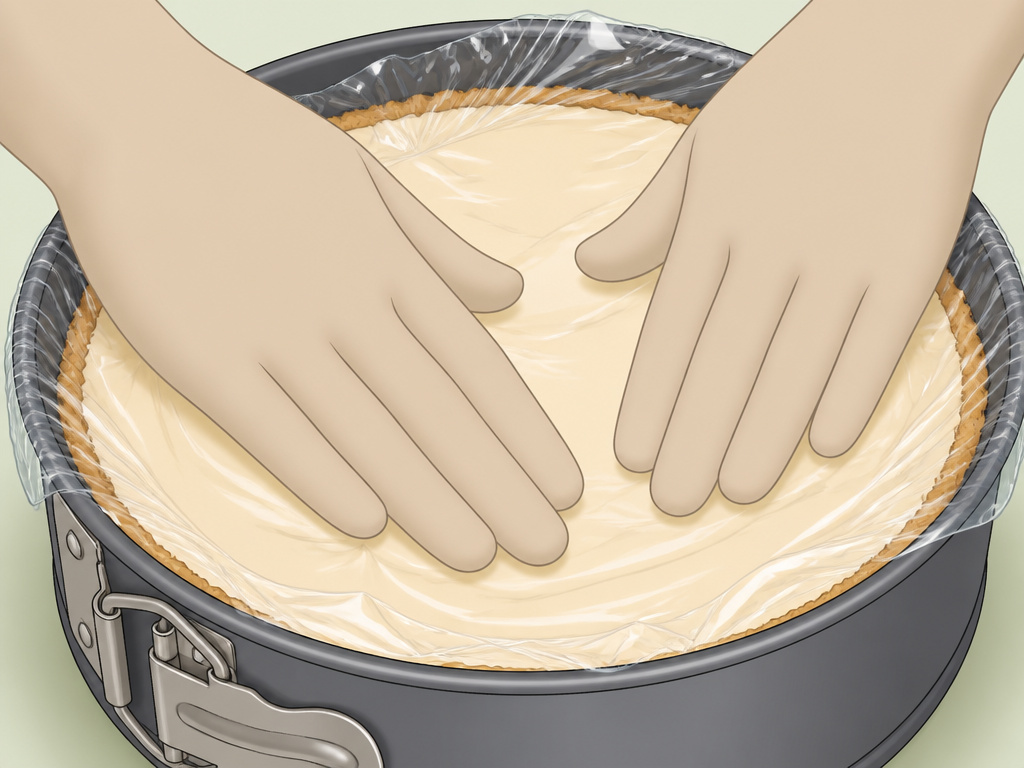
The goal is to lock in moisture without letting the crust get wet. Here’s the sequence that avoids the common pitfalls.
- Cool Completely on a Wire Rack. This is non-negotiable. Trapping residual heat guarantees condensation will form inside your wrap or container. That moisture drops straight onto the crust, turning buttery crumbs into a soggy paste. Let it sit until the pan is room-temperature to the touch.
- Choose Your Defense. You have three main paths, each with a best-use case.
- Plastic Wrap Directly on Surface: Best for a whole cheesecake you plan to serve later. Gently lay plastic wrap directly on the surface of the filling to create an airtight seal. This prevents a skin from forming and stops odor absorption. For the sides and crust, wrap the entire springform pan or plate.
- Airtight Container: Best for slices or whole cheesecakes without delicate toppings. Use a container that fits snugly. A giant container full of air is an invitation for drying out.
- Cake Carrier: Best for transport or if you need to keep a decorated top pristine. Ensure it’s truly airtight; many cake carriers are designed for display, not long-term storage.
- Place it Correctly. The middle shelf, back of the fridge. Not the door. Not on top of a warm appliance. This is a core principle of how to organize fridge for both safety and freshness.
- Label and Date. Write “Baked” or “No-Bake” and the storage date on a piece of masking tape. In four days, you won’t remember.
Common mistake: Putting a warm cheesecake in a sealed container. The steam has nowhere to go, so it condenses and drips back down. You’ve essentially steamed your dessert from the inside.
The tools matter. For long-term cheese storage, we recommend specific cheese containers. For cheesecake, a set of good-quality storage containers with tight-fitting lids is a kitchen essential.
Can You Freeze Cheesecake? Yes, With a Plan.
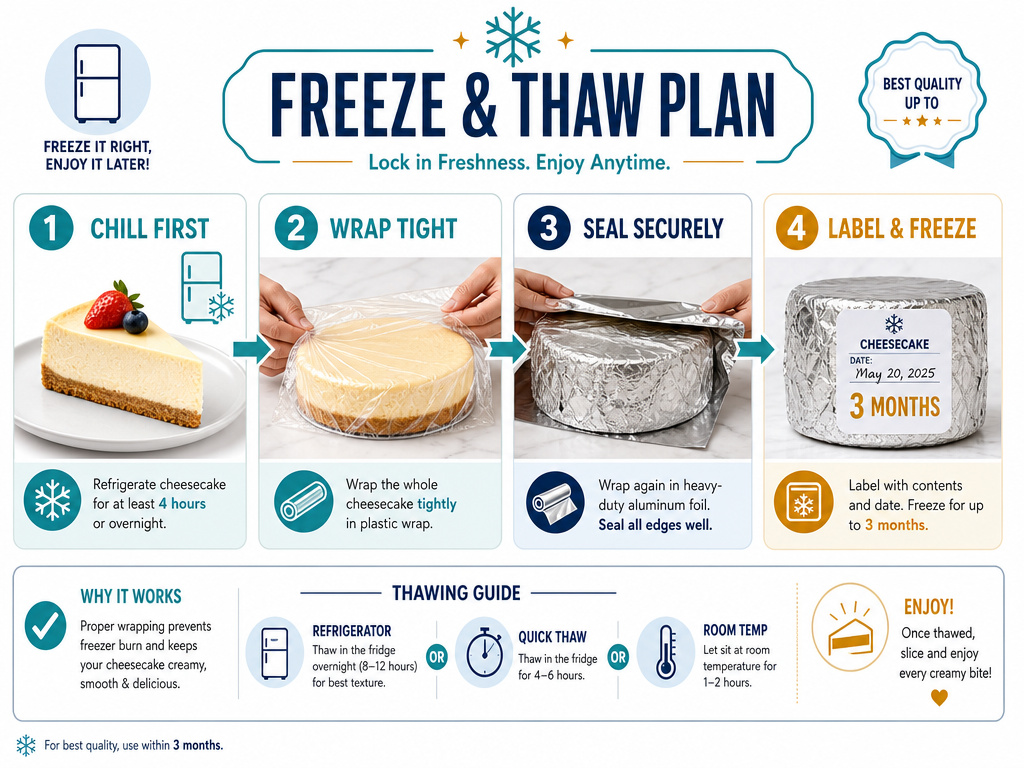
Freezing is an excellent way to hit the pause button. At 0°F or lower, biological activity stops. The enemy here isn’t spoilage; it’s texture degradation and freezer burn.
To freeze a whole cheesecake:
- Chill it uncovered in the fridge for an hour or two until the surface is very firm. This prevents the wrap from sticking and marring the finish.
- Wrap tightly in two layers of plastic wrap, pressing out all air pockets.
- Follow with a final layer of heavy-duty aluminum foil or slide the wrapped cheesecake into a large freezer bag.
- Label with the date and type. Consume within 3 months for best quality.
To freeze slices:
Place slices on a parchment-lined baking sheet and flash-freeze for 2 hours. Once solid, transfer the individual slices to a freezer bag or container. This lets you grab one slice without thawing the whole cake.
Thawing is the make-or-break step. Never thaw at room temperature. The outside becomes soft and wet while the middle is still a rock. Move the wrapped cheesecake from the freezer to the refrigerator for at least 12 hours, or overnight. Slow, cold thawing minimizes condensation and texture damage.
Signs Your Cheesecake Has Gone Bad
Don’t rely on taste. Look, smell, and feel first.
- Visual Mold: Any fuzzy spots, even tiny ones, mean discard the entire cake. Mycotoxins can spread through the soft filling invisibly.
- Off Smell: Dairy spoilage often smells sour, yeasty, or just “wrong.” A fresh cheesecake has a clean, tangy cream cheese aroma. If it smells like your fridge, it’s absorbed odors and is past its prime.
- Texture Changes: Excessive weeping (a pool of liquid), severe separation, or a slimy surface are all red flags.
- Color Changes: Significant darkening or unnatural discoloration, especially in the filling.
When in doubt, throw it out. This is a core tenet of safe food storage, especially for high-risk ingredients like dairy and eggs. Speaking of eggs, proper egg storage begins with knowing how long they last, much like your cheesecake.
Frequently Asked Questions
Does cheesecake need to be refrigerated overnight?
Yes. Both baked and no-bake cheesecakes require several hours of chilling to set properly. Overnight refrigeration ensures a firm, sliceable texture and allows flavors to meld. It’s not just for safety; it’s part of the recipe.
Can I store cheesecake on the counter?
No. Even if your kitchen is cool, the USDA’s 2-hour limit exists because bacterial growth risk increases exponentially after that point. For long-term storage, the counter is not an option. The only exception is during a short serving window.
How do I keep the crust from getting soggy?
The culprit is almost always condensation. Cool the cheesecake completely before covering it. When you do cover, ensure the wrapping is airtight and, if possible, not touching the crust. Storing a whole cheesecake on its base, wrapped, is better than putting it in a deep container where moisture pools.
Can I refrigerate a cheesecake with fruit topping?
You can, but you must adjust your expectations. The cheesecake itself may be fine for 5 days, but the fruit topping will likely become watery and soft within 2-3 days. For best quality, add fresh fruit toppings just before serving.
The Bottom Line
Cheesecake storage boils down to three constants: cold, airtight, and timely. Get it into a fridge at 34–40°F within two hours of serving. Seal it tightly against air and odors. Respect the different clocks ticking on baked versus no-bake versions.
The right container makes a difference. Investing in a set of glass food storage containers for the fridge pays off not just for dessert, but for all your how to store cake needs and leftovers. And a clean fridge is a safe fridge—if odors are a concern, our guide on how to remove odors can help.
For the definitive science on why these temperatures matter, the University of California food safety PDF outlines the principles that keep your food safe. Store it right, and your reward is a perfect slice days after you made it.
