
The Best Way to Remove Odors from Fridge | Cleaning Steps
This post contains affiliate links. As an Amazon Associate, we earn from qualifying purchases.
To remove odors from a fridge, clean every surface with a solution of 1 tablespoon unscented liquid chlorine bleach per gallon of water, as recommended by the USDA for post-spoilage sanitation. Then, address the odor source by replacing air filters (like the Electrolux PureAir Ultra II every 6 months) and using absorbers like baking soda or activated charcoal. Prevention hinges on airtight food storage and proper fridge organization.
That bleach ratio isn’t a suggestion, it’s the standard for killing the bacteria that cause persistent, sour smells. Most guides skip it in favor of gentler cleaners that leave the problem half-solved.
What follows: the exact three-step deep clean, the OEM-specific fixes (filters, optical catalysts), and the storage habits that stop odors before they form. By the end, you’ll know which step you’ve been missing.
Key Takeaways
- The USDA’s 1-tablespoon-bleach-per-gallon solution is the only cleaner proven to sanitize surfaces after food spoilage, which is the root cause of most persistent odors.
- Built-in air filters, like the Electrolux PureAir Ultra II, must be replaced on schedule (every 6 months); the indicator light is a reminder, not a suggestion.
- Odor absorbers (baking soda, charcoal) only work in an already-clean fridge; they mask, they don’t remove, the source.
- Leaving the fridge door propped open during a long vacation is non-negotiable; LG and Bosch manuals explicitly state this prevents mold and odor formation.
- Strong-smelling foods (onions, fish, cheese) demand airtight food containers, original packaging always leaks smells.
Why Does Your Fridge Smell in the First Place?
Forget “old food.” The mechanism is bacterial metabolism. When spoilage bacteria, often Pseudomonas or Lactobacillus, break down proteins and sugars in leaked juices or forgotten leftovers, they release volatile sulfur compounds and organic acids. You smell ethyl acetate (vinegar), putrescine (rotting meat), or hydrogen sulfide (rotten eggs).
The smell isn’t in the air. It’s in the biofilm these bacteria create on plastic surfaces, rubber gaskets, and condenser drip pans. Wiping with all-purpose cleaner removes the top layer but leaves the colony intact. That’s why smells return within days.
The USDA FSIS specifically recommends a sanitizing solution of 1 tablespoon unscented, liquid chlorine bleach per gallon of water for cleaning refrigerator interiors after food spoilage. This concentration kills the biofilm without damaging food-grade plastics.
Your nose is a decent diagnostic tool. A sour, milky smell often points to spilled dairy pooling in a vegetable drawer. A musty, earthy odor suggests mold growing in hidden condensation around the door seal or drip tray. Sharp, chemical smells are less common and might indicate a refrigerant leak, a repair issue, not a cleaning one.
The 3-Step Deep Clean (USDA Method)
This isn’t a quick wipe-down. It’s a full reset. Block off two hours and unplug the unit. If you have a Samsung RT16A6195SR or similar model, wait at least five minutes after unplugging before you start for electrical safety.
Step 1: Empty and Inspect
Remove every single item. Toss anything expired, unidentifiable, or smelling “off.” This is the time to fix a disorganized fridge organization system. As you remove items, check for leaks, a sticky shelf bottom often traces to a cracked soup container or a deli package that wept through the shelf grate.
Step 2: Clean All Removable Parts
Take out shelves, drawers, and door bins. Wash them in the sink with hot, soapy water. For stubborn stains or dried-on residues, make a paste of baking soda and water. Scrub, then rinse thoroughly.
Common mistake: Putting glass shelves directly into hot water. Thermal shock can crack them. Let them come to room temperature first, or wash with warm water.
Step 3: Sanitize the Interior Cavity
Here is the core step most articles gloss over. Mix 1 tablespoon of unscented liquid chlorine bleach into a gallon of cool water. Using a clean cloth or sponge, wipe down the entire interior, walls, ceiling, floor, and the door gaskets. Pay special attention to crevices and the drain hole at the back of the fridge. Let the solution sit for 10 minutes to disinfect, then wipe dry with a clean towel. Before plugging the fridge back in, leave the door open for 30 minutes to air out any bleach scent. It will dissipate completely.
| Component | Cleaning Agent | Risk If Skipped |
|---|---|---|
| Shelves & Drawers | Hot, soapy water; baking soda paste for stains | Dried residues harbor bacteria; smells regenerate in 48 hours. |
| Interior Walls & Seals | USDA bleach solution (1 tbsp/gallon) | Biofilm persists; odor returns within a week. |
| Drip Pan (if accessible) | Warm water & vinegar | Becomes a stagnant bacterial reservoir, causing persistent mustiness. |
When Your Fridge Has a Built-In Odor Fighter
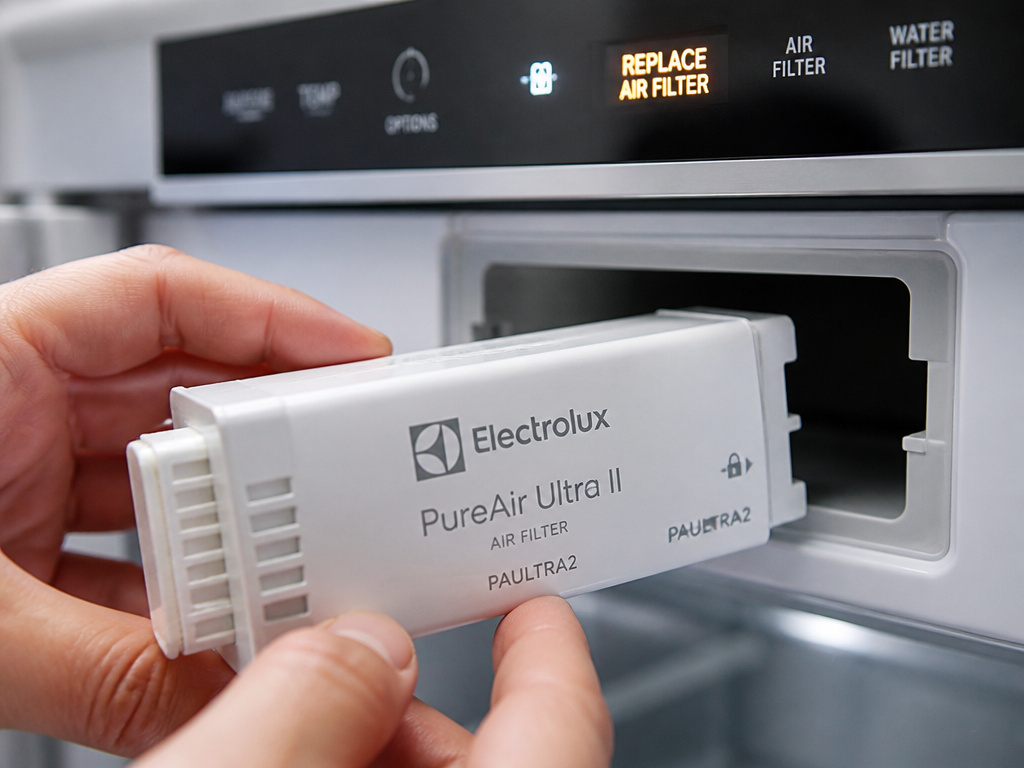
Modern refrigerators often have proprietary systems. Treating them as generic “air filters” leads to failure.
The Electrolux PureAir Ultra II Air Filter uses carbon technology. Its job isn’t to clean the air after a spill. It’s to trap everyday cooking odors (onions, fish) before they saturate your butter and milk. The control panel’s “REPLACE AIR FILTER” indicator activates after six months. Ignoring it means the carbon is saturated and useless, you’re just blowing stinky air around the compartment. Order the PAULTRA2 replacement.
LG’s Optical Catalyst system, found in many French-door models, doesn’t use a replaceable filter. It’s a coated panel that uses light to break down odor molecules. It has no effect on food, but it’s also not a substitute for cleaning. If your fridge is in a hot, humid space, LG notes that dew can form inside. Wipe this moisture away with a dry cloth; letting it sit fosters the mold this system is meant to prevent.
Where this goes sideways: Assuming the “odor control” button fixes a dirty fridge. These systems are for maintenance, not remediation. Clean first, then let them work.
The Right Way to Use Odor Absorbers
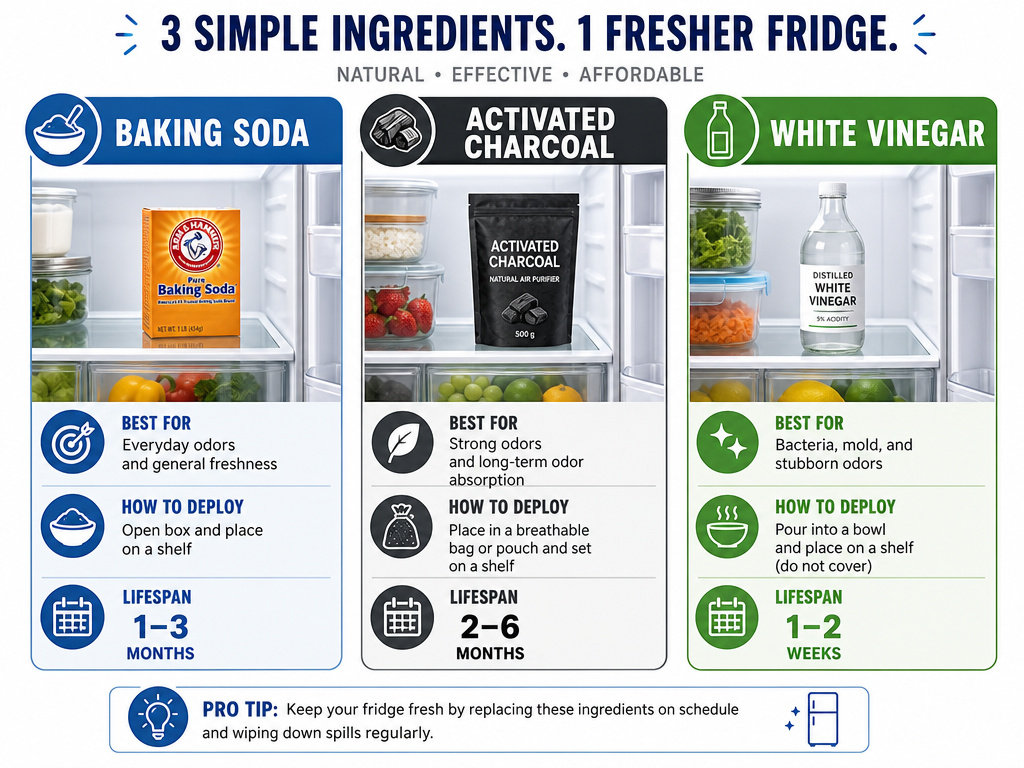
Absorbers belong after the deep clean, not during. Their job is to keep the air fresh, not to fight an active smell war.
Baking soda is sodium bicarbonate. It neutralizes acidic odors on a molecular level through a simple acid-base reaction. An open box does next to nothing, the surface area is too small. Instead, pour half a cup into a shallow bowl for maximum air exposure. Change it monthly. For proper baking soda storage, keep the main box sealed tight to preserve its potency.
Activated charcoal (or carbon) works via adsorption, odor molecules stick to its millions of microscopic pores. It’s more effective than baking soda for a wider range of smells, including sulfurous ones. Look for a reusable bamboo charcoal bag. Recharge it every month by placing it in direct sunlight for a day.
White vinegar in a bowl absorbs smells and adds a faint, clean scent. It’s particularly good for neutralizing the sharp tang of spoiled milk. Just don’t mix vinegar and bleach, the chemical reaction produces toxic chlorine gas.
| Absorber | Best For | How to Deploy | Lifespan |
|---|---|---|---|
| Baking Soda | Acidic odors (sour milk, spoiled fruit) | Shallow bowl, 1/2 cup, uncovered. | 1 month |
| Activated Charcoal | Broad-spectrum smells (onion, fish, garlic) | Commercial bamboo bag or loose in a ventilated container. | 1 month (recharge in sun) |
| White Vinegar | Sharp, pungent odors | Small bowl placed on a shelf. | 1-2 weeks |
How to Prevent Odors Before They Start
This is the real game. It’s about habits, not heroics.
Contain the Smelly Stuff. The Bosch refrigerator manual is blunt: clean all food packaging and store strong-smelling food in airtight containers. That deli paper, takeout box, or original produce bag is not a seal. Transfer leftover cheesecake, cake, and especially pungent cheeses into dedicated storage containers. This single step eliminates most common fridge odors.
Manage Moisture. Wetness is mold’s invitation. Dry off lettuce and fresh greens before refrigerating. Use towels or dedicated mats in vegetable drawers to absorb condensation. Check door seals for tightness, a dollar bill should resist being pulled out when the door is closed.
Mind the Temperature. Bacteria multiply fastest above 40°F. Keep your fridge temperature at or below 37°F. A warm fridge doesn’t just spoil food faster; it makes the spoilage smellier.
Vacation Protocol. Leaving for more than a week? LG’s manual is specific: remove all food, clean thoroughly, disconnect power, and prop the door open. A closed, warm, dark fridge becomes a petri dish. A quarter-inch gap is enough.
What If the Smell Won’t Go Away?
Sometimes, the odor wins. The USDA notes that if smells persist after cleaning, the procedure “may have to be repeated several times.” In extreme cases, the unit “may need to be discarded.”
First, repeat the bleach-sanitization clean. Then, try a “bomb” method: place several shallow bowls of fresh coffee grounds or activated charcoal inside, close the door, and leave it unplugged and open for 48 hours in a ventilated room.
If a musty smell remains, the culprit is often the hidden drip pan underneath or behind the kick plate. Consult your manual for cleaning instructions. If a chemical or acrid smell persists, it could be a refrigerant leak or burned-out component. Stop using the fridge and call a technician.
Frequently Asked Questions
Can baking soda alone remove fridge odors?
No. Baking soda neutralizes acidic odors in the air, but it cannot remove the bacterial biofilm causing the smell on surfaces. It’s a maintenance tool, not a cleaner.
How often should I clean my fridge to prevent smells?
Quick wipe-down of spills should be immediate. A full shelf-and-drawer clean should happen monthly. The deep-clean sanitization is for after a spoilage incident or at least twice a year.
Is it safe to use bleach in my fridge?
Yes, when diluted correctly (1 tbsp/gallon) and rinsed. The chlorine evaporates quickly, leaving no residue. Ensure the area is well-ventilated during and after cleaning.
Why does my new fridge smell like plastic?
This is off-gassing from interior plastics and insulation. It’s normal and harmless. Wipe interiors with a vinegar-water solution (1:1 ratio) and leave an open box of baking soda inside. The smell should fade within a few weeks.
Can a fridge smell make me sick?
The smell itself is not toxic, but the mold or bacteria producing it can be. If you smell mold, avoid inhaling spores while cleaning. Spoiled food odors indicate pathogens that can cause foodborne illness. When in doubt, throw it out.
The Bottom Line
Removing fridge odors isn’t about masking them. It’s a three-act process: sanitize the surfaces with the correct bleach solution, replace or maintain your model’s specific odor-fighting components, and lock in freshness with airtight storage and the right baking soda for odors. The difference between a temporarily fresh fridge and a permanently clean one is following the official USDA cleaning procedures to the letter. Everything else is just a delay.
