Where to Store Bread in the Kitchen for Maximum Freshness
This post contains affiliate links. As an Amazon Associate, we earn from qualifying purchases.
Store bread in the kitchen based on how fast you’ll eat it. For consumption within 2-4 days, the countertop is best. Use a bread box or sealed plastic bag to balance humidity. For longer than 4 days, freeze it. Avoid the refrigerator unless you are actively fighting mold, as the cold accelerates staling through moisture loss.
The 2-4 day window isn’t arbitrary. It’s the gap between when bread tastes its best and when visible mold becomes a statistical certainty at room temperature. That leaves you with one real decision: eat it fast, or commit to the freezer.
What follows is a breakdown of the three storage zones, counter, fridge, freezer, with the specific humidity numbers, spoilage timelines, and texture consequences for each. You’ll learn why a metal bread box can hit 89% humidity, when a plastic bag becomes a mold incubator, and the exact temperature range that turns your pantry into a bread-saving asset.
Key Takeaways
- Bread stored on the counter in a plastic bag can show mold as early as day 4 at room temperature, but the same bag in the fridge prevents mold for at least 10 days.
- The refrigerator is a last resort for mold prevention because temperatures between 34-40°F actively pull moisture from the crumb, accelerating staling despite keeping the loaf visually safe.
- For long-term storage, slicing before freezing and using a double layer of protection (like a bag inside an airtight container) prevents freezer burn and lets you toast slices directly from frozen.
- Commercial bread lasts 2-4 days at room temperature; homemade bread often lasts less due to the lack of preservatives like calcium propionate.
- Your storage container’s material directly controls humidity, plastic bags trap moisture (good against drying, bad for mold), while bread boxes and paper bags allow more breathability.
The Counter: Best for Immediate Eating (2-4 Days)
The kitchen counter is the default for a reason. At the ideal pantry temperature range of 50-70°F (10-21°C), enzymatic activity and crumb structure remain stable. The bread stays at its peak texture and flavor. This only holds if you plan to consume the loaf within a few days.
The enemy here isn’t just time, it’s uncontrolled humidity. Your choice of wrapping or container dictates the race between drying out and molding.
A 2021 study published in the journal Foods measured the internal climate of common storage methods. A metal bread box on the counter reached 89.0% relative humidity, while a standard low-density polyethylene (LDPE) plastic bag hit 89.9%. Both create a highly humid atmosphere conducive to microbial growth.
This is the core trade-off. A sealed environment like a plastic bag or a bread storage container minimizes moisture loss, keeping the bread soft. But that same trapped moisture, combined with room-temperature warmth, is exactly what mold spores need to proliferate. The study found bread in plastic bags at room temperature (about 72°F) showed visible mold as early as day 4, and on most loaves by day 6.
Where this goes sideways: Using a plastic bag on the counter for a full week. The high humidity guarantees mold will win, and you’ll find a loaf that’s still soft but dotted with green or blue fuzz by the weekend.
So, how do you win on the counter?
- Match the timeline to your bread. Commercial sandwich bread, with its preservatives, can often last the full 3-4 days. A rustic, preservative-free sourdough loaf or a moist banana bread is on a faster clock, plan for 2-3 days max.
- Choose your moisture barrier wisely. For 1-2 day storage, a reusable bread bag or beeswax bag offers light protection. For the full 3-4 days, a true airtight bread container or plastic bag is better, but you must accept the mold risk after day 4.
- Keep it cool and dark. Store your container away from the stove, dishwasher, or direct sunlight. Even a few degrees lower within the pantry range buys you extra hours.
| Storage Method | Best For | Risk If Used Too Long |
|---|---|---|
| Bread Box / Bread Keeper | Rustic loaves, 2-3 day storage | High humidity (89%) can promote mold if bread sits beyond 4 days. |
| Plastic / Reusable Bread Bag | Commercial bread, keeping slices soft | Creates a mold-friendly microclimate; inspect daily after day 3. |
| Paper Bag | Crusty artisan loaves (1 day) | Prevents sogginess but dries bread out rapidly after 24 hours. |
The goal is to eat the bread before the storage method’s weakness catches up. If your household can’t finish a loaf in 3-4 days, the counter is no longer your best option.
The Refrigerator: A Strategic Tool for Mold Prevention
Putting bread in the fridge feels wrong because it is wrong for everyday freshness. The refrigerator storage guide from Kansas State University is clear: refrigeration is recommended to inhibit mold growth, but it “will increase staling due to moisture reduction.” You are trading one form of spoilage for another.
The science is straightforward. Staling isn’t just drying out; it’s a retrograde process where starch molecules recrystallize, making the crumb firm and gritty. This process happens fastest at temperatures just above freezing, precisely your refrigerator’s 34-40°F range. The cold air, which has low absolute humidity, acts like a sponge, pulling moisture from the bread’s crumb.
Common mistake: Refrigerating bread to “keep it fresh.” What you get is a loaf that’s mold-free but stale within 24-48 hours, hard, crumbly, and lacking flavor. The texture loss is often worse than the mold you were trying to avoid.
Yet, the fridge has one specific, powerful use: halting mold in its tracks during high-humidity periods. The same study that found mold on day 4 at room temperature saw zero mold growth in plastic bags stored at 8°C (46°F) for a full 10 days. If you live in a hot, humid climate and see condensation on your windows, the fridge can be a tactical pause button.
When does refrigerating bread make sense?
- You’ve pre-sliced a loaf and will toast all of it. Toasting reverses staling by re-gelatinizing the starches.
- A storm is coming, humidity is 90%, and you need an extra 3-4 days. Use an airtight container or plastic bag to minimize moisture loss.
- You’re dealing with a moist, dense bread like banana bread or pumpkin bread where mold is a bigger threat than staling for your planned use (e.g., for baking into a pudding).
The Texas A&M safe food storage PDF notes that refrigerated, unbaked yeast dough has a 2-3 day shelf life before the yeast weakens. This principle applies to baked bread, too, the fridge extends food safety but degrades quality rapidly. It’s a tool, not a default.
The Freezer: The Long-Term Champion (Months)
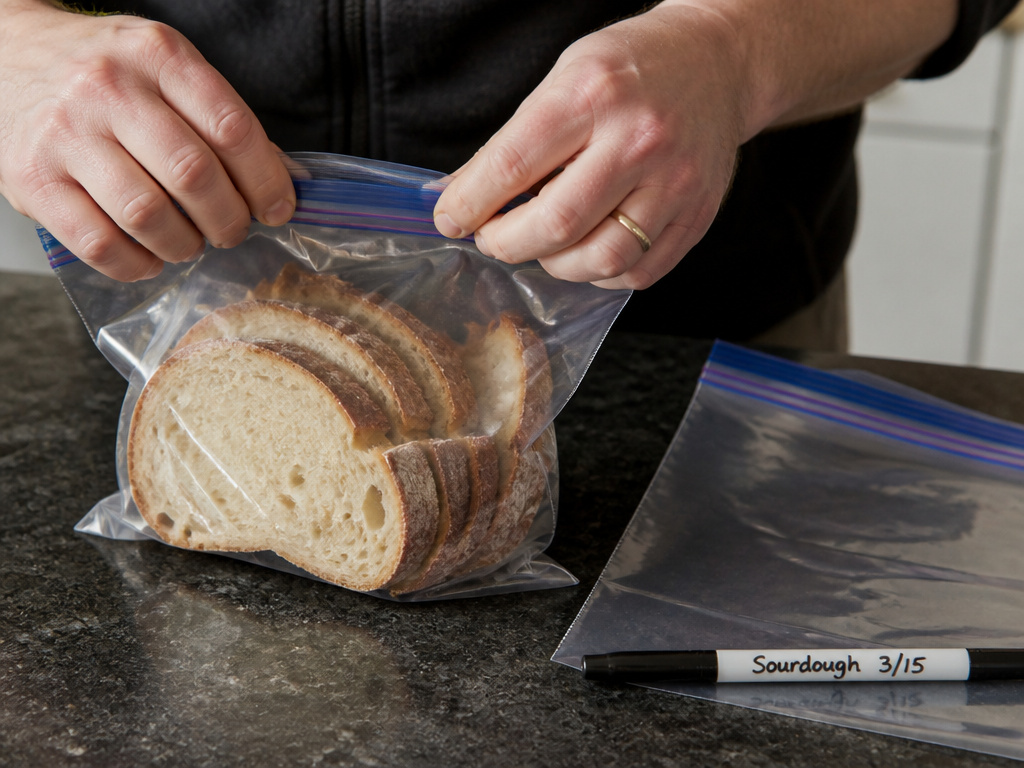
The freezer is the undisputed winner for long-term bread storage. At 0°F, all biological and chemical activity, mold growth, staling, enzymatic changes, stops. A loaf properly wrapped and frozen retains nearly its original quality for 2-3 months.
The key phrase is “properly wrapped.” Freezer burn is the enemy here. It occurs when water molecules sublimated from the bread’s surface form ice crystals inside the packaging, leaving the crumb dry and spongy.
The professional method for freezing bread:
- Slice it first. Unless you plan to thaw and serve the entire loaf, slice it before freezing. This lets you remove only the slices you need. A long, serrated bread knife is essential for clean cuts.
- Double-bag it. Place the slices or loaf in a plastic freezer bag. Press out all excess air, seal it, and then place that bag inside a second bag or a rigid, airtight container. This double barrier is the best defense against freezer burn and odor absorption.
- Label it. Write the contents and date on the bag with a marker. Bread is best within 3 months, but remains safe indefinitely.
I once froze a whole, unsliced sourdough boule in a single bag, thinking the crust would protect it. After a month, the entire outer inch was desiccated and inedible. I had to saw off the freezer-burned shell to salvage the core. Now I slice everything first.
How to use frozen bread:
- For Toast: Place frozen slices directly in the toaster. No thawing needed. Use a slightly longer setting.
- For Sandwiches: Let the slices thaw at room temperature for 30-60 minutes, or place them in a single layer on a rack for faster, even thawing.
- For a Full Loaf: Thaw the wrapped loaf at room temperature for 3-4 hours. For best results, refresh it in a 350°F oven for 5-10 minutes to re-crisp the crust.
The freezer transforms bread from a perishable good into a pantry staple. It’s the only method that genuinely pauses time without the severe quality trade-off of refrigeration.
Choosing Your Storage Method: A Decision Guide
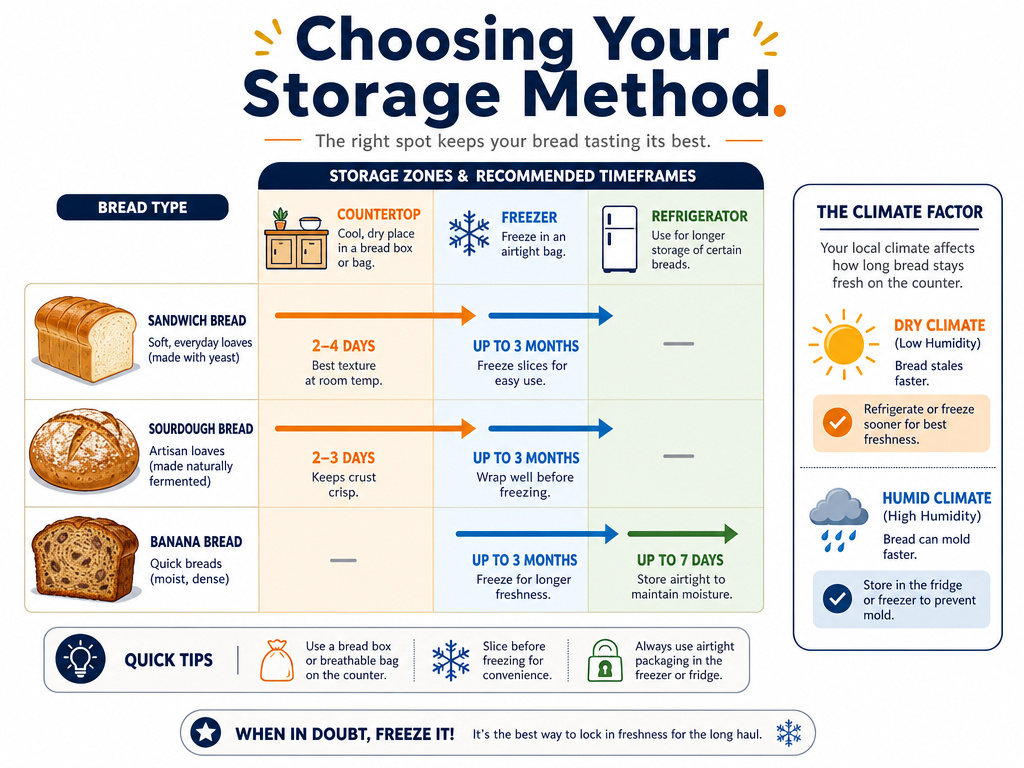
Your bread storage isn’t one-size-fits-all. The right choice depends on the bread type, your climate, and your eating schedule. This table helps you match the method to the moment.
| Bread Type | Eat Within 1-3 Days | Eat Within 1 Week | Eat Within 1 Month+ |
|---|---|---|---|
| Commercial Sandwich Bread | Counter, in original bag | Freezer (sliced) | Freezer (sliced) |
| Artisan Sourdough | Counter, in bread box or paper bag | Freezer (sliced) | Freezer (sliced) |
| Banana Bread / Zucchini Bread | Counter, loosely covered | Refrigerator (if very moist) | Freezer (sliced, tightly wrapped) |
| Homemade Rolls/Baguettes | Counter, cloth-covered | Not recommended | Freezer (pre-bake or fully baked) |
| English Muffins / Bagels | Counter, in bag | Freezer (split first) | Freezer (split first) |
The climate factor: In dry, arid climates, the primary risk is rapid drying. A plastic bag or bread keeper on the counter is ideal. In humid climates, the risk shifts to mold. You may need to shorten counter storage by a day or move to the freezer sooner. The Clemson food storage pantry guide emphasizes keeping storage areas cool and dry, away from heat sources like ovens.
The preservation principle: Your goal is to manage the bread’s exposure to its two antagonists, air (which dries it) and ambient mold spores (which colonize it). Every method is a balancing act between these two forces. A beeswax bread bag offers a middle ground, being more breathable than plastic but more protective than cloth. A specialized bread container with adjustable vents attempts to give you control over the atmosphere inside.
The bottom line? Your kitchen has three distinct storage zones, each with a specific purpose. Use the counter for freshness, the freezer for longevity, and the refrigerator only as a calculated, short-term defense against humidity. Now you can buy the good bread without watching it go to waste.
Frequently Asked Questions
Does refrigerating bread make it last longer?
It makes it safe from mold longer, but it significantly shortens its palatable life. Refrigeration accelerates staling, making bread hard and crumbly within a day or two. For true longevity with minimal quality loss, freezing is the only reliable method.
What is the best container to keep bread fresh on the counter?
The best container is an airtight bread container (sometimes called a bread keeper) made of ceramic or plastic with a tight-sealing lid. It slows moisture loss better than a bread box, which can have high internal humidity. For crusty breads you want to keep crisp, a paper bag or a bread box with ventilation is better.
Can you put bread in the freezer without slicing it?
You can, but you shouldn’t. Freezing a whole loaf makes it difficult to thaw evenly and forces you to defrost more than you need. It also increases the risk of freezer burn on the exposed cut end. Slicing before freezing is the single most effective step for convenient, quality-preserving freezing bread.
How do I thaw frozen bread properly?
For sandwiches, let slices thaw at room temperature on a rack for 30-60 minutes. For toast, go directly from freezer to toaster. To refresh a whole loaf, thaw it wrapped on the counter, then place it in a 350°F oven for 5-10 minutes to restore the crust.
Why does homemade bread go stale faster than store-bought?
Commercial breads contain preservatives like calcium propionate that inhibit mold and extend shelf life. Homemade bread lacks these additives, so it is more vulnerable to both staling and mold from the moment it cools. This is why the storage timelines for homemade bread are almost always shorter.
Before You Go
Your bread’s fate is decided in the first hour after you bring it home. Slice what you won’t eat in three days and freeze it immediately. Leave the rest in an appropriate container on the counter, and enjoy it at its peak. The refrigerator is not your friend here, treat it as an emergency measure for unusually humid weather when mold is imminent.
Remember the numbers: 2-4 days on the counter, 10+ days mold-free but stale in the fridge, 3+ months of near-perfect preservation in the freezer. With that framework, you can stop guessing and start storing with confidence. No more wasted loaves, no more gummy, stale slices. Just good bread, whenever you want it.
