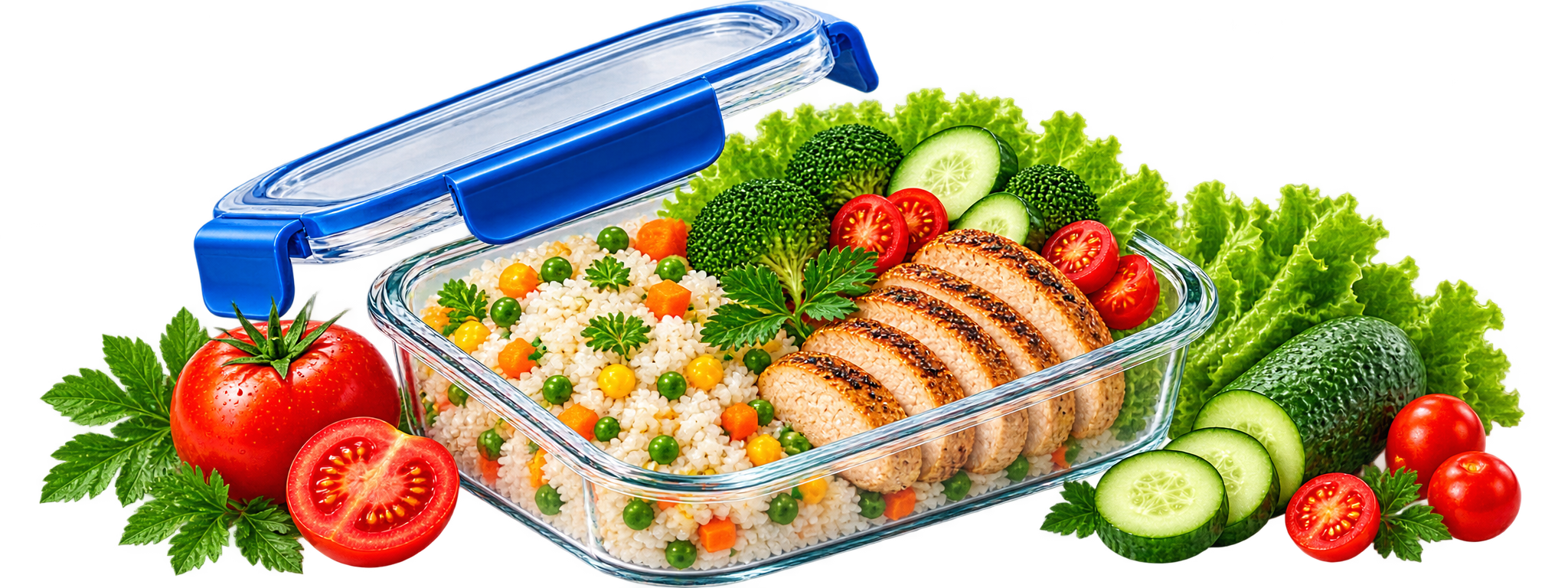
Your Guide on How to Store Rotisserie Chicken Correctly
This post contains affiliate links. As an Amazon Associate, we earn from qualifying purchases.
Store rotisserie chicken in the refrigerator within two hours of purchase (one hour if the room is over 90°F). Portion it into shallow, airtight containers and refrigerate at 40°F or below for 3 to 4 days. For longer storage, freeze it in airtight packaging at 0°F for up to 4 months for plain pieces or 6 months for pieces in gravy.
That 3-to-4-day window isn’t a suggestion. It’s the documented safety limit from the FDA’s storage chart before bacterial growth risks climb. The clock starts the moment the chicken leaves the hot holding cabinet at the store.
What follows: the exact refrigerator and freezer timelines from primary sources, the commercial kitchen rules that prevent cross-contamination, and the reheating temperature that actually makes leftovers safe. We’ll also cover what to do when the power goes out and why your chicken salad shouldn’t go in the freezer.
Key Takeaways
- Refrigerated rotisserie chicken lasts 3 to 4 days at 40°F or below. The countdown starts at purchase, not when you open the container.
- Freeze plain chicken pieces for up to 4 months and pieces covered in broth or gravy for up to 6 months at 0°F for best quality.
- Always reheat leftovers to an internal temperature of 165°F throughout, verified with a food thermometer.
- Store cooked chicken above any raw meat in the refrigerator to prevent dangerous drips.
- Chicken salad or any mayonnaise-based dish does not freeze well; its texture breaks down completely.
The 3-4 Day Refrigerator Clock
Your first move after getting home is the most important. Get the chicken out of its plastic bag and into the fridge fast.
The USDA and FDA chart is clear: cooked poultry dishes have a safe refrigerator life of 3 to 4 days. This includes a whole rotisserie chicken, pieces you’ve pulled off the bone, and any cooked casserole you made with it. The timeline is for safety, not just peak freshness. Pathogens like Listeria can grow at refrigerator temperatures, just slowly. Day four is the hard stop.
According to the FDA Refrigerator & Freezer Storage Chart, cooked poultry dishes can be refrigerated for 3-4 days. Pieces covered with broth or gravy have the same refrigeration life but a longer freezer life.
Portion it immediately. Don’t shove the whole container in the back. Break the chicken down, discard the carcass if you’re not making stock, and store the meat in shallow containers. A deep tub of hot chicken cools too slowly in the center, letting bacteria multiply in the “danger zone” between 40°F and 140°F. Shallow containers promote rapid, even cooling.
This is the same principle behind safe general food storage for any perishable item. The goal is to minimize time in the temperature range where microbes thrive.
Label everything. Use a piece of masking tape and a marker. Write “Rotisserie” and the date you bought it. Without a label, you’ll be guessing by day five, and guessing wrong is how food poisoning happens. This simple habit is a cornerstone of reliable food storage principles.
If your kitchen is particularly warm, above 90°F, you have only one hour to refrigerate, not two. The higher ambient temperature accelerates bacterial growth exponentially.
Freezing for the Long Haul
Freezing is your best tool for preventing waste. At a steady 0°F, freezing stops bacterial growth in its tracks. Quality, however, does change over time.
The FDA chart differentiates between plain chicken and chicken in sauce. Plain cooked poultry pieces are best used within 4 months. Pieces submerged in broth, gravy, or a stew can go 6 months. The liquid layer provides a protective barrier against freezer burn, which is the real enemy of frozen meat quality.
| Preparation | Maximum Freezer Time (0°F) for Best Quality | Key Consideration |
|---|---|---|
| Plain Chicken Pieces | 4 months | Prone to dryer texture; needs airtight wrap. |
| Pieces in Broth/Gravy | 6 months | Liquid protects against freezer burn. |
| Fried Chicken | 4 months | Coating may become soggy upon reheating. |
| Chicken-Based Casseroles | 4-6 months | Depends on sauce and vegetable content. |
Packaging is non-negotiable. Airtight is the only way. For freezer bags, press out all the air before sealing. For rigid containers, choose those designed for freezing and leave about half an inch of headspace for expansion. The flimsy plastic clamshell from the store is not adequate for long-term freezing.
Where this goes sideways: Using a bread bag or grocery produce bag for freezing. These are too permeable, leading to freezer burn within weeks. The chicken develops grayish-white patches and a dry, leathery texture.
When you’re ready to use it, thaw safely. The best method is in the refrigerator, which keeps the chicken at a safe temperature throughout. It will take 24 hours or more. For quicker thawing, use the cold-water method: seal the package in a leak-proof bag and submerge it in cold water, changing the water every 30 minutes. Never thaw at room temperature.
If you only need part of a frozen block, it’s safe to thaw the whole thing, remove what you need, and promptly refreeze the rest. This is a key point in the guidelines for refreezing chicken.
The Commercial Kitchen Hierarchy (Why Raw Goes Below)
Home fridges are chaotic. Professional kitchens have strict rules to prevent cross-contamination, and we should steal them.
Commercial equipment manuals are blunt about this. The BKI VGG rotisserie oven manual states: “Never store or mix raw foods above cooked foods.” The Henny Penny SCR service manual echoes it: “store cooked products above raw products.” Why? Gravity. Juices from raw chicken can drip down and contaminate the cooked food below it with pathogens like Salmonella. Cooking kills those pathogens on the raw chicken, but the cooked chicken has no defense if contaminated after the fact.
In your fridge, designate a low shelf for raw chicken and other raw meats. Keep your cooked rotisserie chicken, hard-boiled eggs, and cooked rice on a shelf above. If you can’t use separate shelves, place cooked foods in sealed containers on the top shelf and raw meats in sealed containers or drip trays on the bottom.
This spatial discipline is a non-negotiable part of chicken storage safety. It turns your refrigerator into a managed system instead of a hazardous jumble.
Reheating to Safety, Not Just Warmth
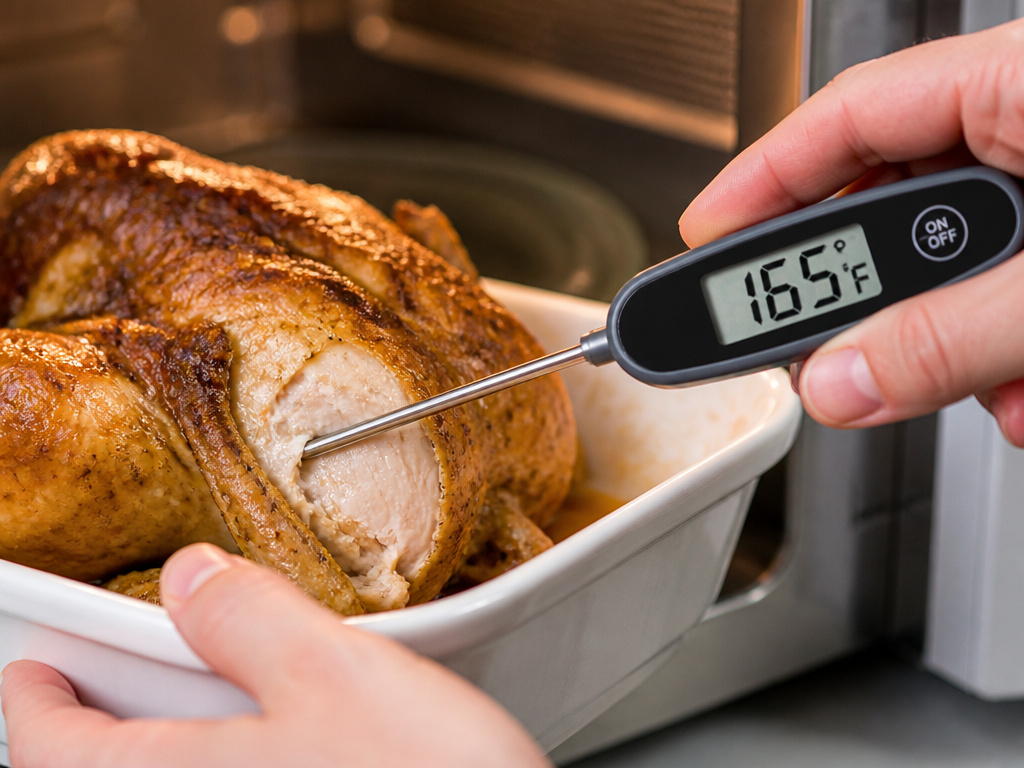 Microwaving until “steamy hot” is not a safety standard. You need a specific, verifiable temperature.
The safe reheating temperature for leftovers is 165°F throughout. This temperature is high enough to destroy any bacteria that may have grown during storage. You must check this with a food thermometer, inserted into the thickest part of the meat, away from bone.
Common mistake: Stirring microwave-heated chicken and assuming it’s done. The heat distribution is wildly uneven. Always let it stand for a minute after microwaving, then check multiple spots with a thermometer.
For best results, reheating methods rank like this: 1. Oven or Toaster Oven (350°F): Spread chicken in a single layer on a baking sheet. Cover with foil to retain moisture. Heat for 15-20 minutes, then check temp. This method restores the best texture. 2. Skillet: Add a splash of broth or water to the skillet with the chicken. Cover and heat over medium-low, turning occasionally, until 165°F is reached. 3. Microwave: Place chicken in a microwave-safe dish, add a tablespoon of water or broth, and cover loosely. Heat on high in 1-minute intervals, stirring between, until the internal temperature hits 165°F.
Sauces, soups, and gravies should be reheated to a rolling boil. Covering the dish helps ensure the heat penetrates evenly.
What Not to Do: The Freezer Fails
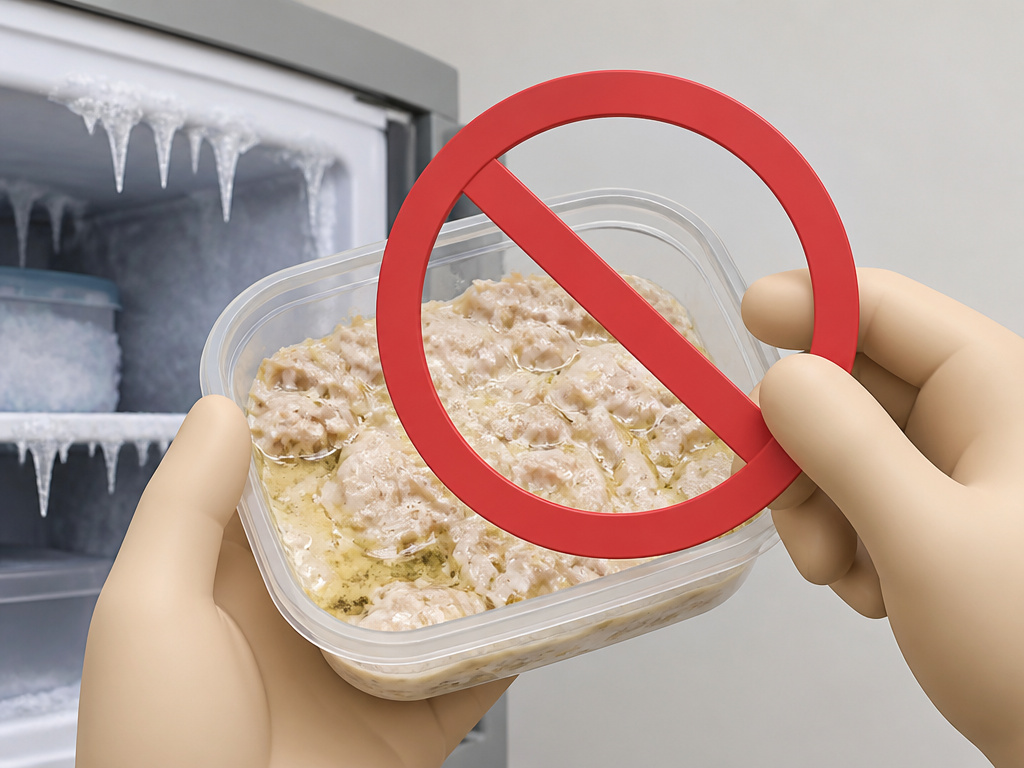 Freezing is a powerful tool, but it has limits. Some dishes simply don’t survive the process.
Mayonnaise-based chicken salad is the prime example. The emulsion in mayonnaise breaks when frozen, resulting in a separated, greasy, and watery mess upon thawing. The texture of the chicken itself also becomes unpleasantly mushy. If you have chicken salad, your only option is the 3-to-5-day refrigerator window.
Similarly, pre-stuffed poultry items have very short fridge lives, often just one day, and are not recommended for freezing. The moist dressing next to the meat creates an ideal environment for faster bacterial growth.
Your other storage staples have their own rules. Cheese needs wrapping that balances moisture retention and airflow. Sourdough bread stales fastest in the fridge; it’s better at room temperature or frozen. Tomatoes, onions, and potatoes all demand cool, dark, dry places, not the refrigerator. Applying the right method to each item is what prevents waste.
Power Outage and “Oops I Left It Out” Scenarios
Life happens. The party goes long, or a storm knocks out the electricity. Here’s how to triage.
The two-hour rule is your baseline. Perishable food left at room temperature for more than two hours should be discarded. If the room temperature is above 90°F, that window shrinks to one hour. This is a core directive from the USDA leftovers safety guide. When in doubt, throw it out. The cost of a new chicken is trivial compared to the cost of foodborne illness.
During a power outage, keep the fridge and freezer doors closed as much as possible. A full freezer will keep food safe for about 48 hours; a half-full freezer, about 24 hours. A refrigerator will keep food cold for about 4 hours. If the outage is prolonged, you can use ice or frozen gel packs in a cooler for critical items like your cooked chicken.
If the chicken was left out overnight, there is no safe reheating temperature that can fix it. Some bacteria produce toxins that are not destroyed by heat. Discard it.
Frequently Asked Questions
Can I store the rotisserie chicken in the container it came in?
You can for a day or two in the fridge, but it’s not ideal. Those containers are often too deep for rapid cooling and aren’t truly airtight. For best safety and to prevent your fridge from smelling like chicken, transfer the meat to proper shallow, airtight containers within a few hours.
How can I tell if rotisserie chicken has gone bad?
Trust your senses. Look for a slimy film on the surface. Smell it, spoiled chicken has a distinct, sour, or ammonia-like odor. If you see any mold, which is rare but possible, discard it immediately. When in doubt, follow the official leftovers safety page rule: throw it out.
Is it safe to eat the skin after refrigerating?
Yes, the skin is safe to eat if the chicken has been stored properly. The texture will become rubbery and soft, however. For better texture, you can re-crisp the skin under a broiler for a minute or two, watching it closely to prevent burning.
Can I freeze a whole, uneaten rotisserie chicken?
Yes, but it’s inefficient. A whole chicken takes up a large amount of freezer space and takes much longer to thaw. You’ll get better results and more flexible meal options if you carve the chicken, package the meat in meal-sized portions, and freeze those.
What’s the best way to use up leftover rotisserie chicken?
Shred it for tacos, enchiladas, or chicken salad (eat within 3 days). Dice it for soup, casseroles, or fried rice. The carcass makes an excellent quick stock. Having a plan prevents the chicken from languishing in the fridge until day five.
The Bottom Line
Store rotisserie chicken in the fridge for 3 to 4 days max, and always above raw meat. Freeze what you won’t eat in time, packaged tightly against air. Reheat with a thermometer, not a guess, to 165°F. These aren’t just tips; they’re the documented boundaries between a great leftover meal and a preventable mistake. Your fridge is a tool. Use it with the same precision you’d use your oven.
