Can You Refreeze Chicken After Thawing? Key Rules to Follow
This post contains affiliate links. As an Amazon Associate, we earn from qualifying purchases.
You can put chicken back in the freezer after defrosting if it never left the cold chain. The chicken must have thawed in a refrigerator at or below 40°F (5°C) for no more than 24 hours. If it thawed on the counter, in water, or in a microwave, you must cook it before refreezing. The clock starts the moment the temperature hits 40°F.
That 40°F threshold is the line between safe handling and the danger zone. Most foodborne bacteria double every 20 minutes between 40°F and 140°F. Your refrigerator is a controlled slowdown; your kitchen counter is a bacterial sprint.
What follows is the breakdown of that rule: the 24-hour fridge window, the two methods that change the game, what actually happens to the meat, and how to handle a freezer full of thawed food after a storm.
Key Takeaways
- Refreeze raw chicken only if it thawed in a fridge at or below 40°F (5°C) and for less than 24 hours. This is the core safety rule from Australian and U.S. Authorities.
- Chicken thawed by microwave or cold water must be cooked before refreezing. These methods push parts of the meat into the danger zone, so refreezing it raw is unsafe.
- Quality loss is guaranteed. Each freeze-thaw cycle damages cell walls, leading to drier, tougher cooked chicken. It’s safe but often disappointing.
- Ice crystals are your visual pass. If the chicken is still partially frozen or feels as cold as your fridge, it’s safe to refreeze immediately.
- Label everything “Refrozen” and use it within a month. Don’t treat it like a fresh freeze; plan to cook it soon.
The 24-Hour Fridge Rule: Your Safety Pass
The single condition that permits refreezing raw chicken is a documented, time-limited thaw in controlled cold. Australian food safety authorities put a number on it: thaw at or below 5°C (41°F) for no longer than 24 hours.
Food thawed in the refrigerator can be safely refrozen without cooking, but anything thawed in cold water or a microwave should be cooked before going back into the freezer, according to FDA guidelines. The refrigerator must maintain 40°F or below.
This rule exists because your refrigerator slows bacterial growth to a near standstill. It does not stop it entirely. Giving the process a 24-hour cap is the margin of safety. Beyond that, even at fridge temperatures, the bacterial load can reach a point where refreezing just preserves a problem.
The moment you move the thawing process out of the fridge, the rules change completely. Countertop thawing is never safe for refreezing. A national survey found that 67% of adults aged 18 to 24 thought it was fine to refreeze chicken thawed on the bench. They were wrong. Room temperature is a direct ticket into the danger zone.
Your first step is always to verify your fridge’s temperature with a thermometer. Guessing doesn’t work here.
When You Must Cook First: Microwave & Water Thawing
These methods are for speed, not for storage flexibility. Both microwave defrosting and the cold-water bath method inevitably warm parts of the chicken above 40°F. Even if the center is frozen, the outer layers enter the temperature danger zone.
The official guidance is unanimous: if you use these methods, cook the chicken immediately. You can then freeze the cooked chicken. You cannot refreeze it raw.
| Thawing Method | Can You Refreeze Raw? | Next Step | Why the Rule Exists |
|---|---|---|---|
| Refrigerator (≤40°F) | Yes, if within 24 hours | Refreeze or cook | Cold chain never broken; bacterial growth minimized. |
| Cold Water Bath | No | Must cook immediately | Outer layers warm past 40°F; clock in danger zone starts. |
| Microwave | No | Must cook immediately | Creates hot spots that can cook edges, putting parts in danger zone. |
| Countertop / Room Temp | Never | Discard | Entire mass enters danger zone; unsafe to refreeze or sometimes even cook. |
The microwave’s “defrost” setting is particularly deceptive. It often begins to cook the edges and joints while the center remains icy. Once you hit start, you’ve committed to cooking that chicken for dinner.
Why Texture Suffers (But Safety Doesn’t)
 Safety and quality are separate conversations. You can have a perfectly safe piece of chicken that cooks into a tough, dry, and flavorless meal. This is the main reason people think refreezing is dangerous—they conflate a bad eating experience with a health risk.
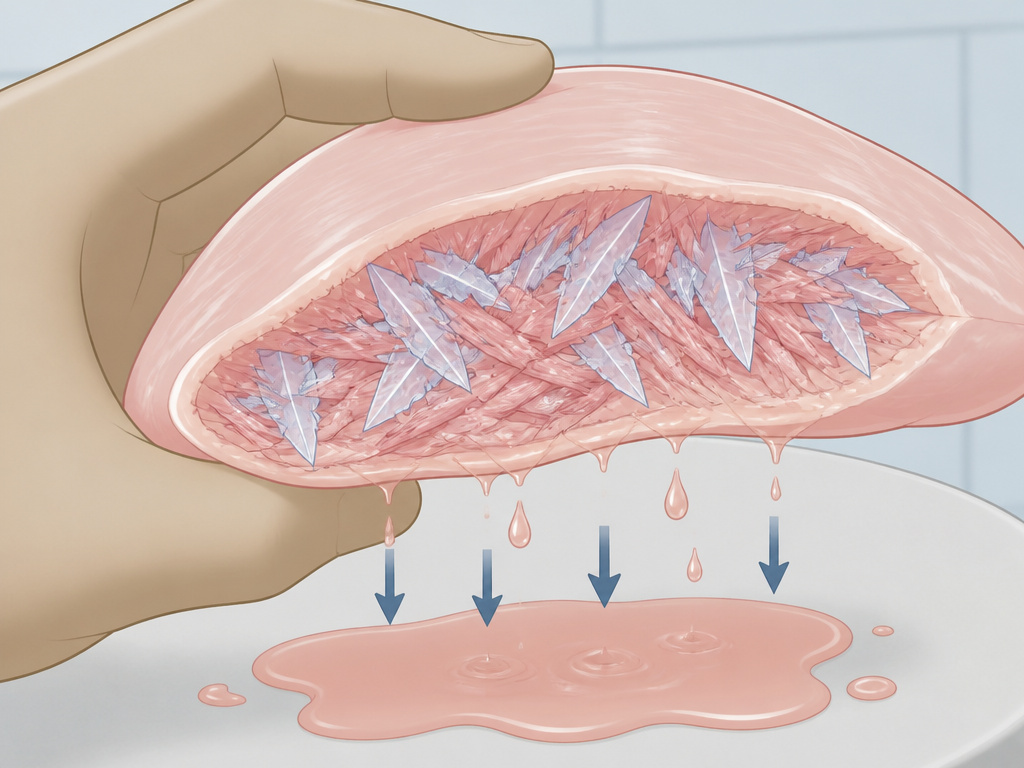
Freezing forms ice crystals inside the chicken’s muscle cells. Thawing breaks down those cell walls. When you refreeze, the process repeats, causing more cellular damage and moisture loss. This moisture, called drip loss, is what you see in the package when thawing. It contains flavor and juiciness that won’t come back.
Where this goes sideways: Refreezing a whole, waterlogged pack of chicken breasts. The excess liquid refreezes as large, jagged crystals that do the most damage. Pat the chicken dry before refreezing to minimize this.
The quality drop is most noticeable in lean cuts like breasts. Thighs and drumsticks, with more fat, handle the process slightly better. The safest path is to cook the thawed chicken and then freeze the cooked meat. The cooking process changes the protein structure, so the second freeze has less impact on texture.
The Ice Crystal Exception and Power Outages
 What if your chicken is only partly thawed? Or your freezer door was left ajar overnight after a party? This is where visual inspection overrides the timer.
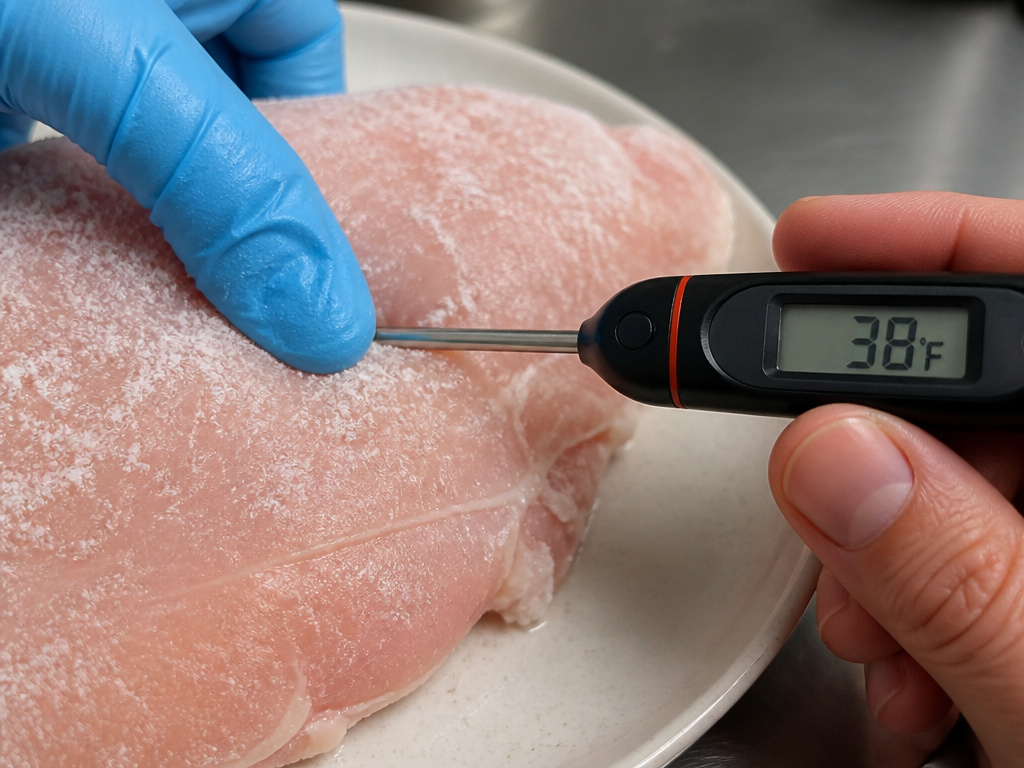
If the chicken still contains ice crystals or feels as cold as if it were in the refrigerator (40°F or below), it is safe to refreeze. The ice crystals mean the core temperature never rose into the danger zone. This is a common scenario after a brief power outage or when dealing with a very full freezer.
A freezer full of frozen food will usually stay at a safe temperature for up to 48 hours if the door remains closed. Use a thermometer to check the internal temperature when power returns. If it reads 40°F or below, the food is safe to refreeze.
For organized long-term storage, using freezer-safe containers or vacuum sealing can protect against both freezer burn and temperature fluctuations. Vacuum sealing removes air, which slows the formation of those damaging ice crystals.
Step-by-Step: How to Refreeze Chicken Correctly
If your chicken passes the safety check, follow this sequence to minimize quality loss and keep your kitchen organized.
- Verify the temperature. Use a food thermometer to ensure the chicken is 40°F or below. If it’s warmer, cook it now.
- Pat it dry. Use paper towels to soak up any surface moisture from thawing. This reduces ice crystal size when it refreezes.
- Repackage it. If the original packaging is torn or bloody, transfer the chicken to a new, airtight bag or container. Remove as much air as possible.
- Label clearly. Write “REFROZEN” and the current date on the package with a permanent marker. Do not trust your memory.
- Freeze quickly. Place the package against the freezer’s back or side wall, where it’s coldest, to freeze through rapidly.
- Plan to use it soon. Treat refrozen chicken as a short-term asset. Aim to use it within one month for the best quality.
Skipping the repackaging step is how you end up with freezer burn—those grayish-white leathery patches. Freezer burn is a quality issue, not a safety one, but it makes the chicken taste stale and dry.
Storing Other Thawed Foods: Cheese, Bread, and More
The refrigerator-thaw rule applies to most raw meats and poultry. But other common freezer items have their own quirks. Knowing the difference prevents waste.
Dairy and Prepared Foods: You can refreeze freezing cheese if it was thawed in the fridge, but it will often become crumbly. Cooked dishes like freezing banana pudding can be refrozen, but the texture of dairy-based dishes may separate.
Baked Goods: Freezing bread is very forgiving. You can refreeze thawed bread, though it may stale faster. The real enemy here is moisture from condensation, which makes the crust soggy.
Jellies and Desserts: The high sugar content in freezing jelly or freezing Jell-O acts as a preservative. They can typically be refrozen, but may suffer texture changes like syneresis (weeping liquid).
The principle is the same: if it thawed safely in the cold, it can usually go back. When in doubt, cook it, then freeze.
Frequently Asked Questions
Does refreezing chicken kill bacteria?
No. Freezing does not kill bacteria; it just presses pause on their growth. When you thaw and refreeze, you are preserving whatever bacterial load existed at the time of refreezing. That’s why the initial thaw must be done in a safe, cold environment.
How many times can you refreeze chicken?
Technically, if you never leave the safe cold chain, you could refreeze multiple times. Practically, you shouldn’t. Each cycle degrades quality significantly. Most experts recommend a maximum of one refreeze for raw meat. The better practice is to thaw only what you need, or to cook after the first thaw and freeze the cooked product.
Can you refreeze chicken that was cooked from frozen?
Yes. If you cooked frozen chicken directly (without a thawing step) to a safe internal temperature of 165°F, you can freeze the leftovers. The cooking step reset the safety clock.
What if I’m not sure how long the chicken was thawed?
When in doubt, throw it out. This is the cardinal rule of food safety. The cost of a package of chicken is never worth the risk of foodborne illness. If you didn’t monitor the thaw, or if the chicken feels slimy or has an off odor, discard it.
Does vacuum sealing make refreezing safer?
Vacuum sealing improves quality, not safety. By removing air, it drastically slows freezer burn and the formation of large ice crystals. This means refrozen vacuum sealing chicken will taste better and have better texture than chicken refrozen in its store tray. The safety rules for time and temperature remain unchanged.
The Bottom Line
You can put chicken back in the freezer, but the path you choose matters. The 24-hour refrigerator thaw is your only safe pass for raw refreezing. Any other method commits you to cooking first. While the chicken will be safe to eat, expect a noticeable drop in juiciness and texture. Your best move is to treat your freezer as a one-way street for raw meat: thaw, cook, then freeze the cooked result. For everything else that thaws unexpectedly, look for the ice crystals and trust your thermometer, not the calendar.
