
The Best Way to Store Mint: A Bartender’s Dry-Towel Technique
This post contains affiliate links. As an Amazon Associate, we earn from qualifying purchases.
Store fresh mint by washing it, trimming the stems, wrapping it tightly in a dry paper towel, and sealing it in an airtight container in the coldest part of your refrigerator (around 4°C). This method, from a NYC bartender, keeps mint crisp and green for over a week by balancing moisture without causing rot.
That 4°C target is the refrigerator temperature Miele’s service manual recommends for general food safety, and it aligns with the agricultural research on cutting post-harvest respiration. The dry paper towel is the counterintuitive part, most guides say damp.
What follows: the exact five-step bartender method, the science of why mint flavor fades (light, temperature, leaf age), and the one ice-water trick that revives wilted sprigs in 30 minutes.
Key Takeaways
- Wrap mint in a dry paper towel, not a damp one, before refrigerating. Excess water causes black rot within days.
- Set your refrigerator to 4°C. This temperature slows respiration without freezing the delicate leaves.
- Harvest or buy mint with leaves at least 12 days old for peak menthol content; younger leaves have weaker flavor.
- If mint wilts, shock it in a bath of ice-cold water for 30 minutes to re-crisp the leaves.
- For long-term storage, drying or freezing in ice cubes beats trying to keep it fresh indefinitely.
Why Mint Loses Its Flavor (The Science)
Mint doesn’t just wilt. Its signature flavor evaporates. The compounds that give mint its cooling punch, primarily menthol in peppermint and carvone in spearmint, are volatile terpenes stored in tiny oil glands on the leaf called trichomes. These are fragile. Heat, light, and physical damage burst them open, letting the aroma escape into the air before it ever reaches your mouth.
Mint is a shallow-rooted crop with medium to high water requirements, but it is sensitive to overwatering. The Washington State University extension guide notes that typical irrigation practices often keep the top soil too wet, which encourages roots to stay in the top 6-8 inches. This makes the plant more susceptible to water stress. For flavor, a slightly lowered water availability might even increase menthol levels, though the research says this isn’t consistent.
The plant’s own biology works against storage. According to the AHDB Horticulture Factsheet, menthol production in peppermint doesn’t really start until leaves are 12 to 20 days old. Leaves harvested younger have lower levels of the good stuff. Furthermore, mint is “climacteric”, it continues to ripen and respire after being cut, consuming sugars and producing ethylene gas, which accelerates aging.
That’s why your storage method is about slowing down a biological process already in motion. Getting it wrong doesn’t mean soggy leaves.It means bland ones.
The 5-Step Refrigerator Method for Fresh Mint
This isn’t the generic “damp paper towel” advice. This is the method from Gelo Honrade, beverage manager at NYC’s Gui Steakhouse and Bar 92, who handles mint in bulk for cocktails. His goal is service-ready mint that lasts over a week.
Step 1: Inspect and Clean. Unwrap your bunch immediately. Pick out any blackened or yellow leaves, they’re already decaying and will spread. Submerge the good sprigs in a bowl of cold water, swish gently to dislodge dirt, and lift them out. Don’t scrub.
Step 2: Trim the Stems. Use sharp scissors or a knife. Cut the stems to a uniform length, long enough to handle but short enough to fit in your container. Honrade stresses not to rip or crush the stems, damage here invites rot and blocks water uptake if you try to revive it later.
Step 3: Dry Thoroughly. This is critical. Let the mint air-dry on a towel or use a salad spinner. The leaves should feel dry to the touch but not brittle. Residual washing water is enough.
Step 4: Wrap in a DRY Paper Towel. Take a fresh, dry paper towel. Wrap the mint bundle snugly. The dry towel will absorb excess moisture from the leaves while maintaining a humid microclimate. A damp towel adds water, which is the fast track to black, slimy leaves.
Step 5: Seal and Chill. Place the wrapped bundle in an airtight container. A Cambro container or a glass Lock & Lock works perfectly. Date the container. Put it in the coldest part of your fridge, ideally where the temperature is closest to 4°C.
Common mistake: Using a damp paper towel or plastic bag. The mint’s own high moisture content needs a buffer, not a bath. You’ll see black edges in two days.
This method works because it manages the two big enemies: moisture loss (wilting) and excess moisture (rot). The dry towel is the regulator. Your general guide to storing food applies here, cool, consistent temperature and protection from air.
Dry Towel vs. Damp Towel: Why the Consensus is Wrong
Almost every beginner guide says “damp paper towel.” They are wrong for mint. The reasoning sounds logical: herbs wilt, so add moisture. But mint leaves are about 85% water already. When you wrap them in a wet towel, you’re trapping too much water against a delicate plant structure with no way for it to evaporate.
The result is cell rupture and microbial growth. The leaves turn black and slimy from the inside out.A dry towel pulls just enough moisture from the surface to prevent condensation inside the wrap, while the sealed container keeps the overall humidity high enough to prevent drying out.
Think of it like storing fresh herbs like basil or cilantro. Basil hates cold and needs a room-temperature stem-in-water approach. Cilantro can handle the fridge but often comes with muddy roots. Mint is its own category, tough-looking but easily waterlogged.
| Storage Method | Mechanism | Risk If Used on Mint |
|---|---|---|
| Damp paper towel | Adds external moisture | Black rot within 2-3 days; drowned cells |
| Dry paper towel | Absorbs excess surface moisture | Prevents rot; maintains crispness for 7+ days |
| Plastic bag, loose | Traps all moisture and ethylene | Accelerated yellowing and off-flavors |
| Stem in water (fridge) | Provides direct hydration | Stem rot can still occur; takes up more space |
The dry-towel method is a specific answer to mint’s specific problem. For storing parsley, which is less watery, a slightly damp towel might work. For mint, it’s a failure.
How to Revive Wilted Mint
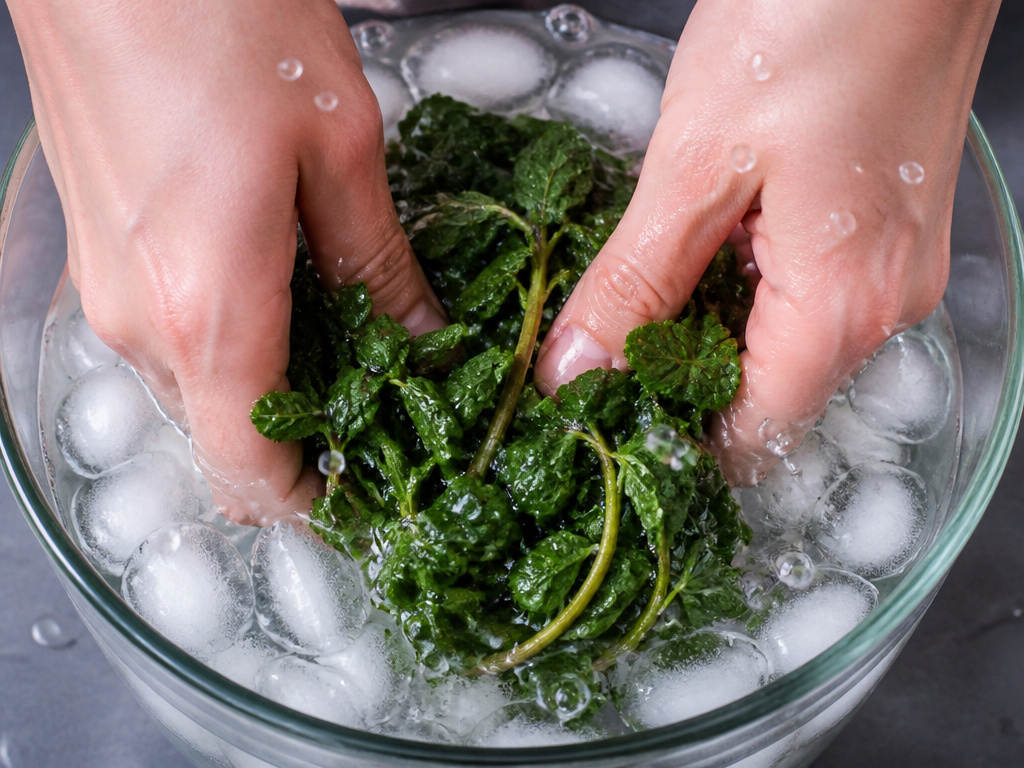 Found a limp bundle in the back of the fridge? Don’t toss it. Honrade’s bar trick is to shock it back to life.
Where this goes sideways: Assuming wilted mint is dead. If it’s not black or slimy, it’s likely just dehydrated. Submerge the whole sprigs in a bowl of ice-cold water for 30 minutes. The leaves will often rehydrate and perk up.
The cold water constricts the plant’s cells, forcing water uptake. It’s a last-ditch effort, but it can buy you another day or two for use in cooked dishes or muddled cocktails where perfect appearance is less critical. After the bath, shake off water and use the dry-towel method again.
This revival trick highlights mint’s resilience. It wants to live. Your job is to give it the right conditions, not to drown it in kindness.
Beyond the Fridge: Long-Term Mint Storage
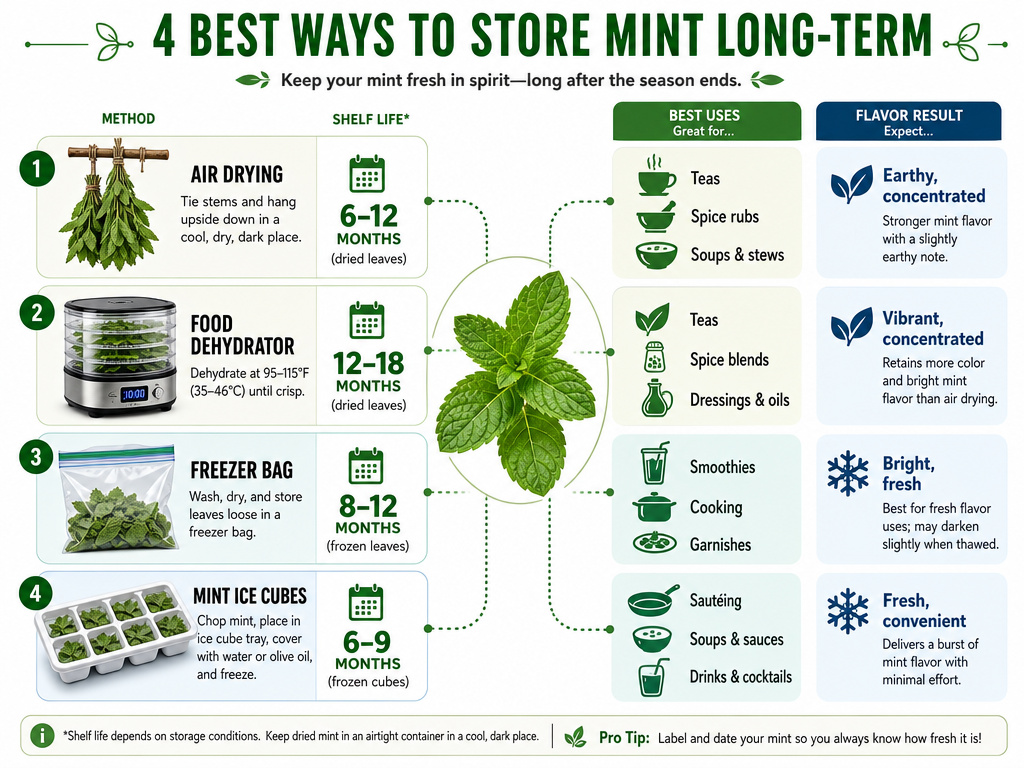 Refrigeration is for fresh use within a week or two. For preserving a garden haul, you need different techniques.
Drying: This is the most traditional method. Hang small bundles upside-down in a dark, well -ventilated space or use a food dehydrator on its lowest setting. Dried mint loses its bright top notes but retains a deep, earthy mint flavor perfect for teas, seasoning blends, and cooked dishes. Once crisp, strip the leaves and store them in an airtight jar away from light. This is a core herb drying method.
Freezing: For a closer-to-fresh flavor, freezing is superior. You have two good options: 1. Freeze whole leaves on a parchment-lined tray before transferring to a freezer bag. This prevents a solid block. 2. Chop and freeze in ice cube trays with a little water. Pop out the cubes and bag them. These are ready to drop into sauces, smoothies, or drinks.
Frozen mint keeps its color and much of its flavor for about six months. It will be too limp for garnish but perfect for anything where it will be cooked or blended.
| Long-Term Method | Best Use Case | Flavor Profile Result |
|---|---|---|
| Air Drying | Teas, spice rubs, potpourri | Earthy, concentrated, less “bright” |
| Dehydrator Drying | Quick drying for cooking herbs | More uniform color and potency than air drying |
| Freezing (whole) | Cooked dishes, compound butters | Retains most fresh character, but limp |
| Freezing (ice cubes) | Drinks, sauces, smoothies | Convenient pre-portioned, slight water dilution |
These methods solve a different problem than refrigerator storage. They are for long-term ginger storage or preserving garlic, not for keeping a cocktail garnish ready.
Frequently Asked Questions
Can you store mint at room temperature?
No. Mint’s high respiration rate means it deteriorates rapidly at room temperature. It will wilt and lose flavor within hours. The only room-temperature option is storing stems in a glass of water, like a bouquet, for immediate use within a day.
How long does fresh mint last in the fridge?
With the dry-towel and sealed-container method, fresh mint can stay crisp and flavorful for 7 to 10 days. Without proper storage, it may wilt or turn black in 2-3 days.
Should you wash mint before storing?
Yes, but you must dry it thoroughly afterward. Washing removes soil and microbes that speed up decay. The key is ensuring the leaves are surface-dry before wrapping them in the dry towel, so you’re not locking in wash water.
Can you freeze mint without blanching?
Yes. Mint is delicate and blanching (brief boiling) will destroy its texture and flavor. Freeze it raw using the tray or ice cube methods described above. Blanching is for vegetables like green beans, not for tender herbs.
Why did my mint turn black in the fridge?
Blackening is almost always caused by excess moisture and/or temperature fluctuation. A damp storage environment leads to cell damage and fungal growth. Ensure your mint is dry before storage, use a dry towel, and keep your fridge temperature steady at around 4°C.
Before You Go
Storing mint is about respecting its biology: it’s a watery, fragrant, shallow-rooted plant that continues to ‘breathe’ after you pick it. Fight the instinct to add more water.The dry paper towel in a sealed container at 4°C is the bartender’s secret because it works with the science, not against it.
For your other herbs, remember they each have a preference. Basil hates the cold. Cilantro likes a similar dry-towel method but often comes with roots intact. Parsley is a bit tougher. Treat them as individuals, not a uniform category, and you’ll waste less and taste more.
