The Guide to Safe Baking Soda Storage in Your Refridge
This post contains affiliate links. As an Amazon Associate, we earn from qualifying purchases.
Store baking soda for odor absorption by placing an open box on a refrigerator shelf. To store it for baking, keep it in a sealed, airtight container in a cool, dry pantry. The refrigerator’s high humidity—often above 76% relative humidity at room temperature—causes baking soda to absorb moisture, clump, and begin decomposing over weeks.
That 76 percent humidity figure is the line. It comes from a USDA technical report citing stability studies: sodium bicarbonate is stable below 76% relative humidity at 25°C. Above that, it absorbs water, clumps, and starts a slow chemical breakdown. Your refrigerator lives above that line. The crisper drawer pushes 95 percent. The door shelves swing between 60 and 80 percent on a humid day.
What follows: the exact science behind that humidity ceiling, the right and wrong ways to use your fridge for baking soda, and the simple test that tells you when your box has crossed from a deodorizer into a damp brick.
Key Takeaways
- Refrigerator humidity typically exceeds 76% relative humidity, the stability ceiling for baking soda. Storing an open box for baking there guarantees clumping and potency loss within weeks.
- Use the refrigerator only for odor absorption. Place a dedicated, opened box on a shelf, replace it every 1-3 months, and never dip into that box for baking.
- For baking-quality storage, use an airtight container in a pantry. Glass jars with rubber gaskets or dedicated baking containers beat the cardboard box.
- Baking soda absorbs food odors. Storing it open near strong-smelling items like cheese or onions will taint its flavor for future baking.
- Test potency by mixing a spoonful with vinegar or lemon juice. A strong, immediate fizz means it’s active; a weak reaction means it’s time to replace it.
The Science Behind Refrigerator Humidity
Your refrigerator is a cold, damp box. While it keeps food fresh, it creates an environment that directly contradicts the storage needs of a hygroscopic powder like sodium bicarbonate.
Sodium bicarbonate is stable below 76% relative humidity (RH) at 25°C (77°F) and below 48% RH at 40°C (104°F). Above 85% RH, it absorbs excessive water and may start to decompose. — USDA Agricultural Marketing Service, 2025 Technical Report
This is the sourced-number citation that reframes the entire question. The 76% RH at 25°C is not a guess. It’s a documented stability threshold from controlled studies cited in the USDA sodium bicarbonate handling report.
Now, measure your fridge against that number. According to appliance engineering data, the average refrigerator interior maintains a relative humidity between 70% and 90%. The crisper drawers, designed for veggies, often hit 90-95% RH. Even the main shelves rarely dip below 70% on a normal day. You are placing a moisture-sensitive powder into an environment that permanently sits at or above its decomposition trigger.
The mechanism is simple. Sodium bicarbonate particles have a massive surface area. In high humidity, water vapor condenses on these surfaces. The powder absorbs the water, which leads to clumping. Over time, this absorbed moisture initiates a slow chemical decomposition, converting some of the baking soda into sodium carbonate (washing soda). This process is accelerated if the baking soda is already in an aqueous solution—like if it gets wet—but even damp air starts it.
Where this goes sideways: Putting your main baking supply in the fridge “to keep it fresh.” Within a month, you’ll find a hardened brick at the bottom of the box. That brick has lost a measurable portion of its leavening power.
So the rule is absolute: the refrigerator is a tool for odor control, not for storage. The two purposes require completely different protocols.
Using Baking Soda in the Fridge vs. Storing It There
This is the core decision every kitchen makes, and most get it backwards. You need two separate supplies: one for odor fighting, one for baking.
The Odor-Absorption Box (Lives in the Fridge)
This is the classic open box on the shelf. Its job is to neutralize acidic odor molecules from spoiled food. It works because baking soda is alkaline.
- Use a small, cheap box. Dedicate one box solely to fridge duty. Never bake with it.
- Open it fully. Tear off the entire inner seal. For effective absorption, you need maximum surface area exposed to air. A tiny corner slit is useless.
- Place it on a middle shelf, not in the door. The door experiences greater temperature and humidity swings as it opens and closes.
- Replace it every 1 to 3 months. Once saturated with odors and moisture, it stops working. Mark the date on the box when you open it.
This method is endorsed by the USDA refrigeration safety guidelines for keeping the refrigerator smelling fresh. It is a sacrificial use.
The Baking Supply (Never Goes in the Fridge)
This is your precious leavening agent. Its quality directly determines whether your cakes rise and your cookies spread.
- Transfer it immediately. The moment you open a new box for baking, pour its contents into a permanent, airtight container. The cardboard box is a terrible barrier against humidity and odors.
- Choose the right container. A glass jar with a clamp lid and rubber gasket (like a Fido jar) or a dedicated airtight canister is ideal. Avoid cheap plastic containers that can impart a smell.
- Store it in a cool, dry pantry. This is the cornerstone of proper flour storage methods and applies to all dry, moisture-sensitive goods. A cupboard away from the stove, oven, or dishwasher is perfect.
- Keep it away from strong odors. Just as with storing cheese or raw chicken, isolation matters. Don’t store your baking soda container right next to the onions or spices. It will absorb those aromas and carry them into your next batch of pancakes.
| Purpose | Container | Location | Lifespan | Risk If Mixed Up |
|---|---|---|---|---|
| Odor Absorption | Opened cardboard box | Refrigerator shelf | 1–3 months | Baking with odor-saturated powder taints food |
| Baking / Cooking | Sealed airtight jar | Dry pantry | 6–12 months | Moisture causes clumping and potency loss |
The Right Container and Where to Put It
Choosing a container is not about aesthetics. It’s about creating a physical barrier against the two enemies: moisture and ambient odors.
For long-term storage of baking supplies, you need a seal that a determined molecule of water vapor cannot cross. The cardboard and thin plastic liner of a baking soda box fail this test within days in a typical kitchen.
Your best options:
- Glass Jars with Sealing Lids: Mason jars or glass clamp-top jars. The glass is inert and won’t transfer smells. The rubber gasket on a clamp lid provides a superior seal compared to a screw-top.
- Quality Plastic Airtight Canisters: Look for containers marketed for baking storage with a push-button seal mechanism and a silicone gasket around the rim. OXO POP containers are a common benchmark.
- Stainless Steel Canisters: These are excellent for complete light and odor blockage, though they are often a more significant investment.
Once sealed, location is everything. The cool, dry place mantra has specific parameters:
- Cool: Below 25°C (77°F). This is usually any indoor pantry away from an oven.
- Dry: As far below 76% RH as possible. This means not in a basement that gets damp, not under the sink, and not in an uninsulated cupboard on an exterior wall.
Think of your baking soda canister as part of a system for storing dry goods. It belongs on the same shelf as your flour, sugar, and cornstarch, all in their own airtight containers. This approach, detailed in our guide on the best containers for baking supplies, is how you build a pantry that fights waste.
Easy to miss: The container’s own cleanliness. Always wash and thoroughly dry a container before transferring baking soda. A single drop of residual water will start the clumping process from the inside out.
How to Test Your Baking Soda (The Vinegar Fizz Test)
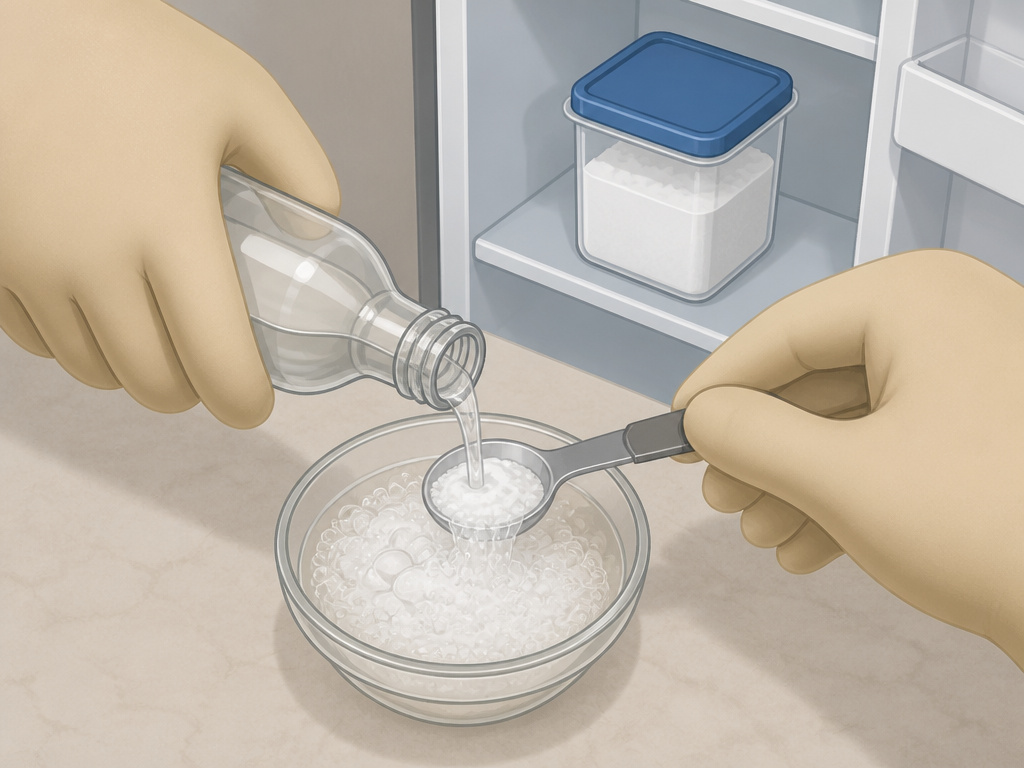
Baking soda doesn’t have a true expiration date, but it has an effective lifespan. The only way to know if your stored supply is still active is to test it. This takes 20 seconds.
The Step-by-Step Test:
- Scoop about 1/2 teaspoon of baking soda from your storage container into a small bowl.
- Add a few drops of white vinegar or lemon juice directly onto the powder.
- Observe the reaction immediately.
Reading the Results:
- STRONG, IMMEDIATE FIZZ: A vigorous eruption of bubbles means your baking soda is fully active. It’s ready for baking.
- WEAK, SLOW FIZZ: A few lazy bubbles or a delayed reaction signal declining potency. It might still work, but your baked goods could fall flat. Time to consider replacing it.
- NO REACTION: If nothing happens, the baking soda has completely lost its chemical activity. It is now functionally just sodium carbonate. Discard it.
This test works because it replicates the chemical reaction required in baking. Baking soda needs an acid to release carbon dioxide gas, which creates rise. No fizz means no gas will be produced in your batter.
How to Revive or When to Replace
You cannot “revive” baking soda that has gone inert. The chemical change is permanent. If your test shows a weak reaction, you have two choices:
- Use it for cleaning. Its abrasive and deodorizing properties are still intact. It’s great for scrubbing sinks or freshening carpets.
- Replace it for baking. For consistent results, start fresh. A new, properly stored box is cheap insurance against a failed recipe.
A good practice is to test your baking soda every 6 months if stored properly in a pantry. If you accidentally left it in a humid environment, test it before your next baking project.
Common Mistakes and How to Avoid Them
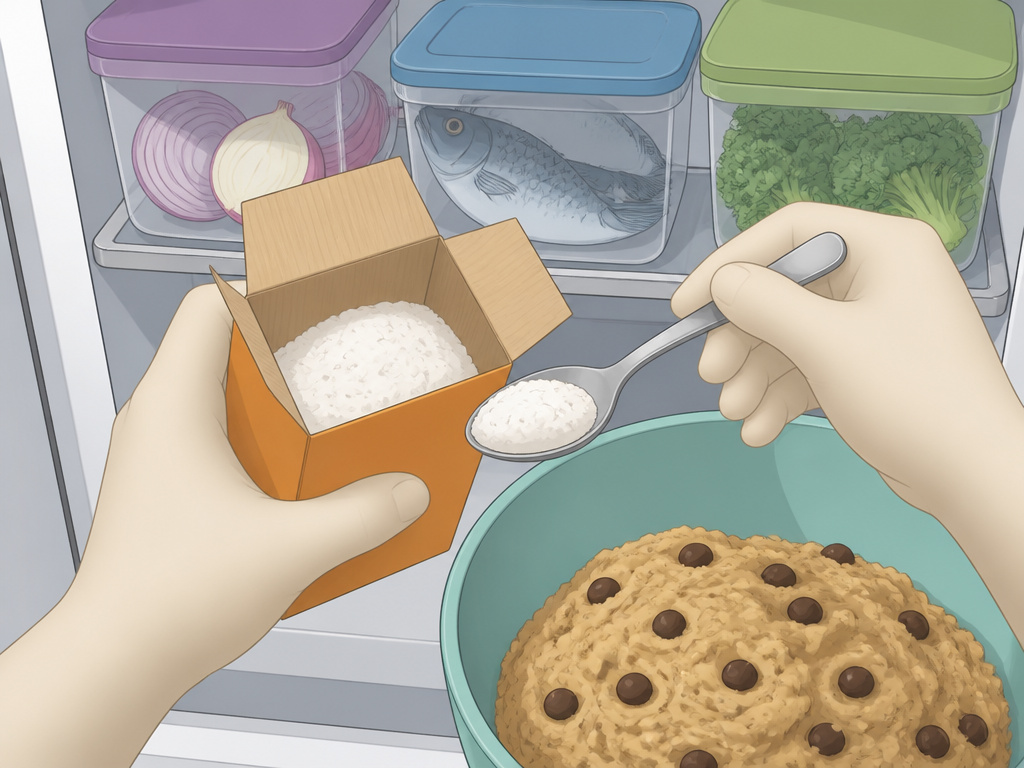
Most storage errors come from misunderstanding baking soda’s physical nature. Here are the pitfalls and their concrete consequences.
Common mistake: Using the fridge box for a baking emergency. That powder has absorbed weeks of onion, broccoli, and leftover salmon smells. It will bake those flavors right into your chocolate chip cookies.
Mistake 1: Assuming the Fridge is “Cold and Dry.”
The fridge is cold and wet. It’s a humidor. Storing your primary baking supply there is the fastest route to a useless, rock-hard mass. The condensed milk or zucchini in your fridge needs that humidity; your baking soda does not.
Mistake 2: Not Sealing the Container After Use.
You pour out a cup for a recipe, then leave the container open on the counter for an hour while you bake. In that time, it’s absorbing kitchen humidity and cooking odors. Get into the habit of closing the lid immediately.
Mistake 3: Storing Near Strong Scents.
Baking soda is a phenomenal odor absorber. That’s why we put it in the fridge. This property is a liability in the pantry. Storing it next to coffee, spices, or onions will subtly flavor it. Keep your baking soda canister in a neutral zone.
Mistake 4: Confusing Baking Soda with Baking Powder.
They are different chemicals with different storage needs. Baking powder is even more sensitive to moisture and often contains its own acid. It should also be kept airtight in a pantry, but its shelf life is shorter. Don’t apply the “fridge deodorizer” method to baking powder.
These principles are part of broader food storage logic: match the storage method to the material’s physical vulnerabilities.
Frequently Asked Questions
Can freezing baking soda keep it fresh longer?
Freezing is less harmful than refrigeration but is still unnecessary. The extreme cold doesn’t damage the chemical structure, but taking it in and out of the freezer causes condensation to form on the powder. This introduces the very moisture you’re trying to avoid. The Michigan State University baking soda article confirms low temperatures don’t help. A dry pantry at stable room temperature is superior.
Does baking soda in the fridge ever go bad?
As an odor absorber, it doesn’t go “bad,” but it becomes exhausted. After 1-3 months, its surface area is saturated with odor molecules and moisture. It stops neutralizing new smells. It should be replaced regularly for effectiveness, not because it’s unsafe.
Is it safe to use baking soda from the fridge for baking?
It is chemically safe, but it is not recommended. The powder will have absorbed ambient food odors, which can transfer to your baked goods, affecting taste. It may also have absorbed moisture, reducing its potency. For quality baking, always use powder from your dedicated, pantry-stored supply.
How long does an unopened box of baking soda last?
An unopened, factory-sealed box stored in a dry place can remain potent for years. The seal is surprisingly effective. However, once opened, the clock starts. Transfer it to an airtight container and use it within 6-12 months for best baking results.
What’s the best way to store a partially used box?
The moment you break the inner seal, the box is compromised. Do not try to “reseal” it with tape. Immediately pour the remaining contents into an airtight container as described above. Discard the cardboard box.
The Bottom Line
Stop thinking of your refrigerator as a general storage solution. For baking soda, it is a single-use tool: odor absorption. That requires a dedicated, sacrificial box you never cook with.
Your actual baking supply demands an airtight container and a spot in a cool, dry pantry, following the same discipline as storing flour or other dry goods. The 76% relative humidity ceiling is the non-negotiable line. Your fridge lives above it; your pantry should live below it.
Follow that separation, test your supply every few months, and you’ll never have a recipe fail because your leavener turned into a damp, scented brick.
