How to Store Sun Dried Tomatoes: Best Methods & Shelf Life
This post contains affiliate links. As an Amazon Associate, we earn from qualifying purchases.
Store sun dried tomatoes by matching the format to the location: dry-packed pouches in a cool, dark pantry for 6–12 months; opened oil-packed jars refrigerated with tomatoes submerged for 2–3 weeks; and any homemade oil-packed version with garlic or herbs refrigerated and used within two weeks. Freezing extends dry-packed shelf life to a year.
That split—dry for the shelf, oil for the fridge—is where most guides stop. The mechanism underneath decides whether your jar molds in a month or lasts through winter. Drying works by dropping water activity below what bacteria need. Oil works by excluding air, which also creates a low-oxygen environment perfect for botulism if the pH isn’t controlled. Commercial producers acidify their oil; home cooks do not. That’s the line.
What follows: the exact temperatures and timelines from extension services, the 2021 study on light’s effect on oil quality, and the one mistake that turns a $15 jar into compost within a month.
Key Takeaways
- Dry-packed sun dried tomatoes are a pantry good. Keep them in an airtight container in a cool, dark place for 6 to 12 months. The freezer pushes that to a year.
- Opened oil-packed jars belong in the refrigerator. Keep the tomatoes fully submerged under the oil and use them within 2 to 3 weeks. The oil will cloud in the cold; that’s normal.
- Homemade oil-packed tomatoes with fresh garlic or herbs are a refrigeration-only product. Use them within two weeks. Do not attempt shelf-stable oil packing without a tested, acidified recipe.
- Light degrades oil-packed tomatoes faster than darkness. A 2021 study found samples stored in the dark were protected against oxidative damage, even though the oil’s antioxidant activity increased.
- Rehydrated tomatoes become perishable. Store them in the fridge and use within about a week, just like you would cooked fresh tomatoes.
The Dry-Packed Pantry Staple
A sealed pouch of dry sun dried tomatoes is nearly as durable as a box of raisins. The preservation technology is ancient: removing water. By slicing tomatoes and drying them at 140°F for 10 to 18 hours, you drop the water activity below 0.6. Most bacteria and molds cannot grow below that threshold. This is the same principle behind storing dehydrated vegetables like peppers or mushrooms.
The shelf life clock starts when you open the bag. Humidity is the enemy.
Common mistake: Leaving the bag clip-open on the counter after using a handful. Ambient humidity re-enters the pouch within hours, and the tomatoes start to reabsorb moisture from the air. Within a week, they lose their leathery texture and can develop surface mold.
Once opened, transfer the tomatoes to an airtight container. A glass mason jar with a tight seal works better than the original plastic pouch. Store the jar in a cool (around 60°F), dark cupboard. Under these conditions, quality lasts 6 to 9 months. For longer storage, the freezer is your best upgrade.
| Storage Method | Expected Shelf Life | Key Condition |
|---|---|---|
| Unopened commercial pouch | 6–12 months | Cool, dark pantry |
| Opened, airtight container | 6–9 months | Cool, dark pantry |
| Frozen in airtight bag | 12 months | No moisture before sealing |
Freezing is straightforward, but it requires a dry start. Ensure there is no moisture on the tomatoes before bagging. Any residual water turns into ice crystals, leading to freezer burn and a tough, brittle texture after thawing. Portion them into amounts you’ll use at once to avoid repeated thaw-freeze cycles.
This dry approach is the foundation for many preservation projects, similar to drying and storing herbs for long-term flavor.
Oil-Packed: The Refrigerator Rule
Oil-packed sun dried tomatoes in a sealed jar are shelf-stable. The moment you break that seal, the rules flip. Opened oil-packed jars must be refrigerated. The oil is not a preservative; it’s a barrier. It excludes air, which slows oxidation and mold growth only as long as the tomatoes stay submerged.
The University of Minnesota Extension drying guide and other food storage principles are clear: low-acid vegetables in oil at room temperature create a risk for botulism toxin. Commercial producers mitigate this by acidifying the product. Your home kitchen does not have that control.
Where this goes sideways: Letting tomatoes poke above the oil line. Exposed pieces darken, oxidize, and mold first. That mold then seeds the rest of the jar. You’ll see a fuzzy film at the oil surface within two weeks.
After every use, press the tomatoes down with a clean spoon. If the oil level drops, top it off with fresh olive oil. The oil will thicken and turn cloudy in the refrigerator—that’s a physical change, not spoilage. Let the jar sit on the counter for ten minutes before use, and it will clear.
How long do they last once opened? Aim for 2 to 3 weeks. Watch for signs of spoilage: fizzing, a sour or yeasty smell, any mold at the oil line, or rancid oil that smells like crayons. If you see one, discard the entire jar.
The Light vs. Dark Factor
Most of us stash jars in the cupboard without thinking about light. A 2021 study on “San Marzano” dried tomato slices preserved in extra virgin olive oil (EVOO) provides a reason to be deliberate. Researchers monitored samples monthly for 12 months under light and dark storage conditions.
Samples stored in the dark are protected against degradative processes. Moreover, after 6 months of storage, the EVOO used as preserving liquid is enriched by the phytochemicals contained in dried tomato slices. This enrichment of EVOO by tomato bioactive compounds is reflected in the increase in the antioxidant activity of the oil independently by the presence of light during storage.
The key finding: darkness protected the tomato slices and oil from oxidative damage. Light accelerated degradation of color and certain phytochemicals. Yet, the oil itself became enriched with antioxidants from the tomatoes over time, regardless of light exposure. The oil’s quality improved, but the tomatoes’ quality suffered in the light.
The practical takeaway: Store your oil-packed jars in a dark cupboard, even if they are refrigerated. If your refrigerator has a glass door, keep the jar in the back or cover it with a paper bag. Light exposure is a slow, silent quality thief.
This level of detail is what separates a generic tip from a scientifically-informed method for preserving tomatoes.
How Long Do Sun Dried Tomatoes Last? A Storage Timeline
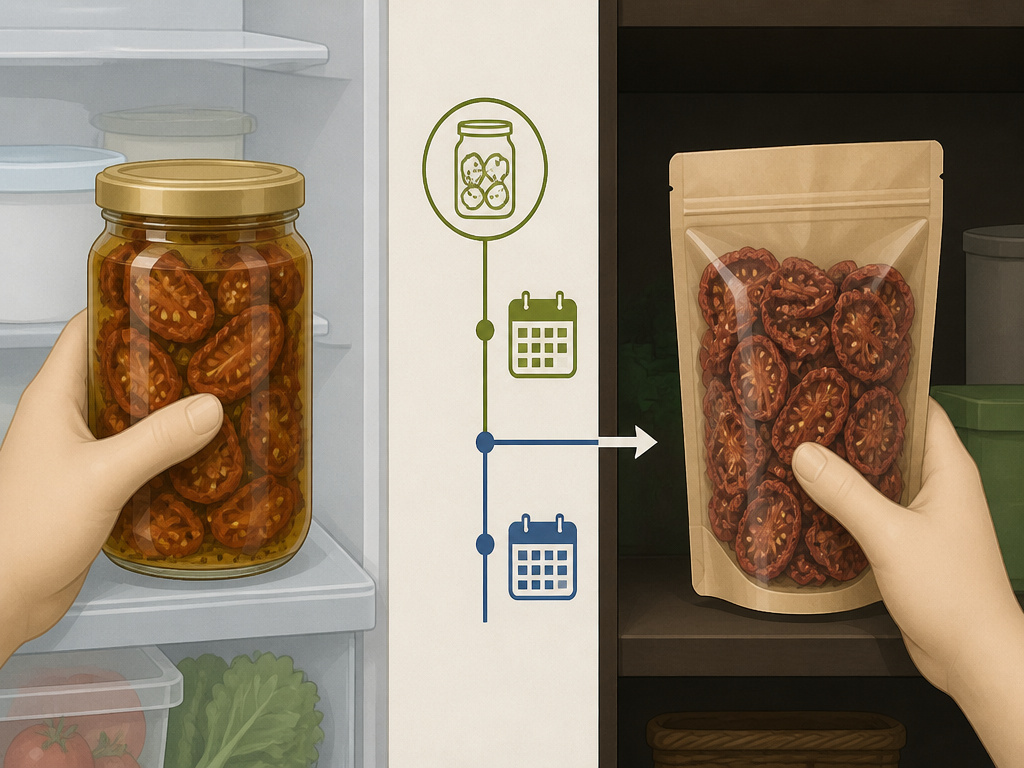
Confusion often comes from mixing formats. A dry pouch and an oil jar have different biological clocks. Here is the definitive breakdown, sourced from extension guidelines and the primary study.
| Format & Status | Storage Location | Shelf Life (Quality) | When It Fails |
|---|---|---|---|
| Dry-packed, unopened | Pantry (cool, dark) | 6–12 months | Brittle, blackened, musty smell |
| Dry-packed, opened & sealed | Pantry (cool, dark) | 6–9 months | Loss of leathery texture, mold spots |
| Dry-packed, portioned | Freezer (0°F) | 12 months | Freezer burn (ice crystals, extreme brittleness) |
| Oil-packed, unopened | Pantry (cool, dark) | 6–12 months | Bulging lid, sour smell |
| Oil-packed, opened & submerged | Refrigerator (≤40°F) | 2–3 weeks | Mold at oil line, fizzing, rancid oil smell |
| Homemade oil-packed (with herbs/garlic) | Refrigerator (≤40°F) | 2 weeks | Same as above, but risk accelerates |
The timeline for dry-packed is generous because the water activity is so low. The oil-packed window is short because the environment, while anaerobic, is not sterile. This is a core principle of proper food storage methods: understand the mechanism to set the clock.
What about freezing oil-packed tomatoes? It’s possible but messy. The oil solidifies, and upon thawing, the texture of the tomatoes can become mushy. If you must freeze, use the jar within a month for best results. For long-term tomato storage, freezing tomatoes in bags is a more reliable method.
Homemade vs. Store-Bought: The Risk Line
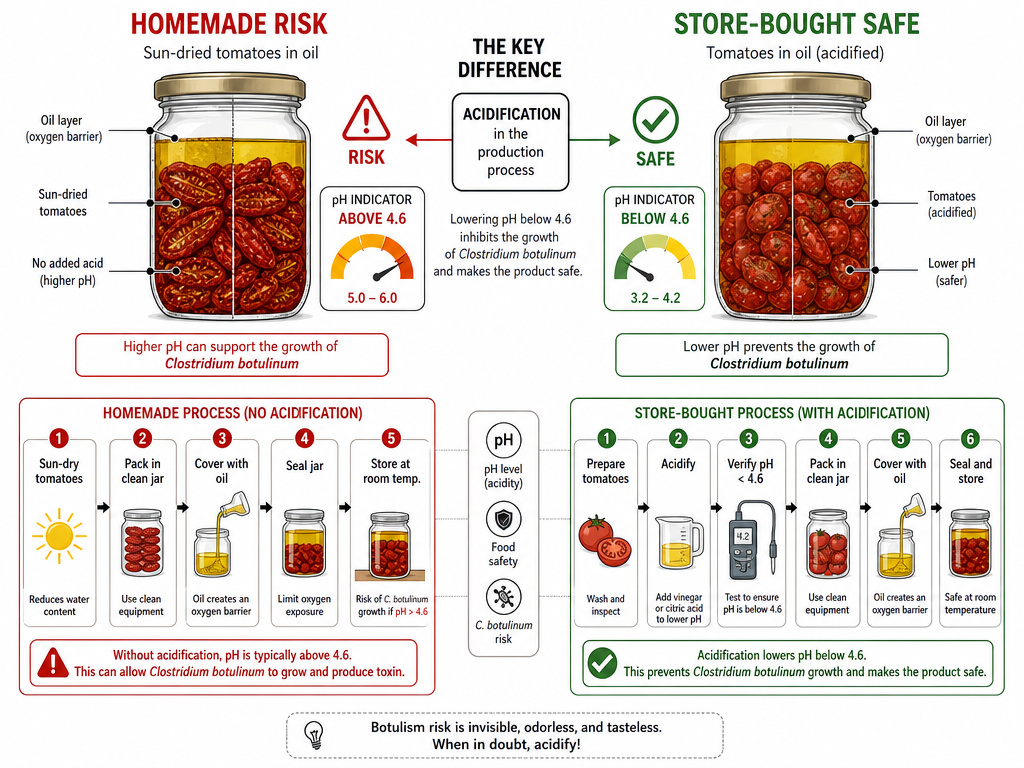
Packing your own dried tomatoes in oil is a popular DIY project. The risk is real and documented. The USDA and extension services classify homemade garlic-in-oil as a known botulism risk. The same chemistry applies to low-acid dried tomatoes submerged in oil without proper acidification.
Store-bought oil-packed tomatoes are acidified during production to achieve a safe pH below 4.6. Your home kitchen lacks this control unless you follow a tested preservation recipe from a source like the Penn State Extension preservation guide.
Worth knowing before you start: If you add fresh herbs, garlic, or onions to your oil jar, you introduce additional moisture and microbial load. This jar now belongs in the refrigerator, not the pantry. Use it within two weeks.
If you want shelf-stable homemade preserved tomatoes, can them using a tested water-bath or pressure-canning recipe. For simple dry storage, your best bet is a dedicated dehydrator and airtight jars, a process detailed in guides for preserving cherry tomatoes.
Rehydration and Use: The Perishable Window
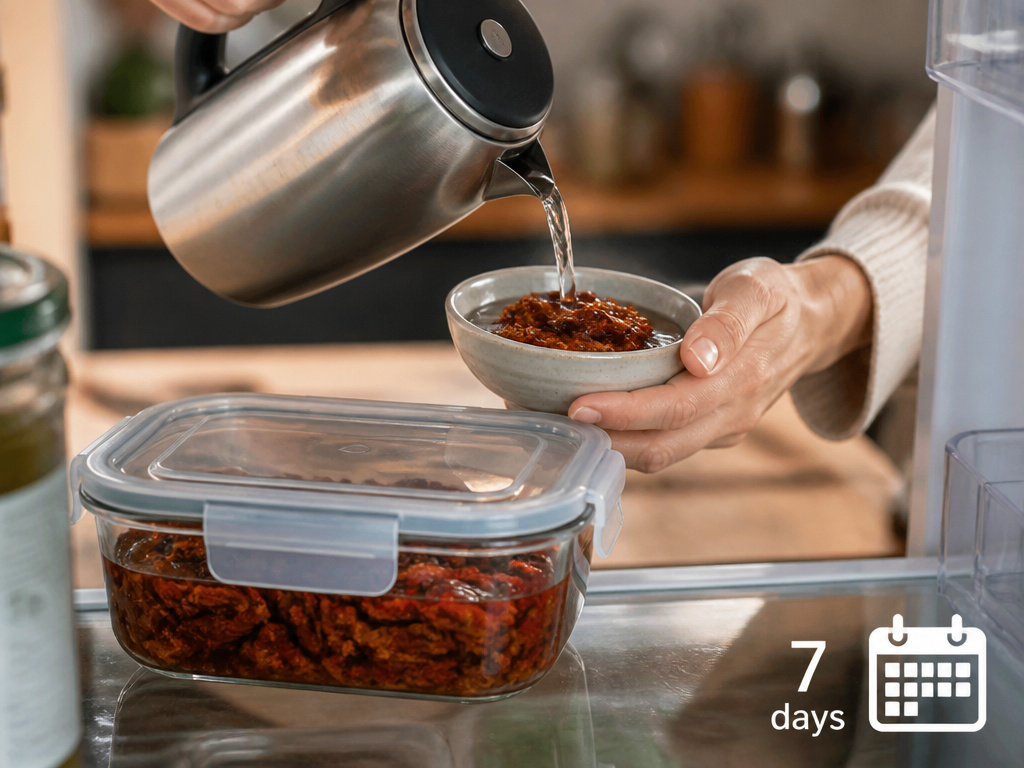
Soaking dry sun dried tomatoes in hot water or broth reverses the preservation. You are putting the water back in. That also restores perishability.
Rehydrated tomatoes should be treated like a fresh cooked product. Drain them, pat dry if needed for your recipe, and store any leftovers in a sealed container in the refrigerator. Use them within about a week.
If you only need a few tomatoes for a recipe, rehydrate only that amount. Keep the rest of the dry pouch sealed. This approach mirrors how you’d handle other reconstituted ingredients, ensuring you don’t waste the valuable pantry stock you’ve carefully stored using methods like proper garlic storage and long-term onion storage.
Frequently Asked Questions
Do sun dried tomatoes need to be refrigerated?
It depends on the format. Dry-packed tomatoes do not need refrigeration until opened, and even then, a cool pantry is fine. Oil-packed tomatoes must be refrigerated after opening. Homemade oil-packed tomatoes with additions must always be refrigerated.
Can you freeze sun dried tomatoes?
Yes, dry-packed tomatoes freeze very well for up to a year. Portion them into airtight freezer bags, remove as much air as possible, and seal. Ensure the tomatoes are completely dry before freezing to prevent freezer burn. Oil-packed tomatoes can be frozen, but the texture suffers.
How can you tell if sun dried tomatoes have gone bad?
For dry-packed: look for visible mold spots (often white or green), a musty or off smell, or tomatoes that have turned brittle and black instead of remaining leathery-red. For oil-packed: any mold at the oil line, fizzing bubbles, a sour or yeasty odor, or rancid oil that smells like crayons or old nuts.
Why is my oil cloudy in the fridge?
Cloudiness is normal. Olive oil contains saturated fats that solidify at colder temperatures. This is a physical change, not spoilage. The oil will clear when brought back to room temperature for 10–15 minutes. If the cloudiness is accompanied by foul smell or mold, discard it.
Is it safe to pack dried tomatoes in oil at home?
It is safe only if you follow a tested preservation recipe that includes acidification (usually with citric acid or vinegar) to achieve a safe pH level, and you process the jars in a water bath canner. If you are simply covering dried tomatoes with oil and adding herbs, you must refrigerate the jar and use it within two weeks.
Can I store sun dried tomatoes in the pantry after opening the oil jar?
No. Once you break the seal on an oil-packed jar, it must be refrigerated. The sterile, anaerobic environment is compromised, and room temperature storage risks bacterial growth, including botulism.
The Bottom Line
Your storage method must match the format. Dry for the pantry, oil for the fridge. Light degrades quality, so keep jars in the dark. Homemade oil packing without acidification is a refrigerator-only, short-term project.
For maximum shelf life and flexibility, buy dry-packed tomatoes. Store them in an airtight jar in a cool cupboard. Rehydrate what you need, when you need it. That approach gives you a year of kitchen-ready flavor without the weekly clock of an open oil jar.
When you treat the oil as a perishable condiment and the dry tomatoes as a pantry staple, you’ll never waste another batch. The difference isn’t just about location—it’s about understanding why each method works, and where its limits lie.
