Does Jello Go in the Fridge or Freezer? The Essential Rule
This post contains affiliate links. As an Amazon Associate, we earn from qualifying purchases.
Yes, Jello goes in the refrigerator, not the freezer. The cold, stable temperature of a fridge allows gelatin proteins to form a smooth, wobbly network that traps liquid. A freezer introduces ice crystals that shred this network, turning thawed Jello grainy and watery. For a standard batch, plan on 2–4 hours in the fridge; a large mold needs 4–6 hours.
That smooth, jiggly texture is a temporary victory of physics over chemistry. The gelatin network is delicate, held together by weak bonds that cold stabilizes and heat or ice destroys. This guide walks through the mechanics of both methods, so you know exactly what you’re trading when you’re in a hurry.
What follows: the precise fridge times for every mold size, the physical reason freezing fails, a breakdown of shelf life, and the fruits that will sabotage your dessert before it even sets.
Key Takeaways
- The refrigerator is the only correct place for setting and storing Jello. A freezer will set it faster but permanently ruins the texture by forming ice crystals that tear the gelatin network.
- Setting time scales with volume. Individual cups take 1.5–2 hours; a standard 8×8 pan needs 2–4 hours; a large mold over 6 cups requires 4–6 hours minimum.
- Fresh pineapple, kiwi, papaya, and figs contain enzymes that digest gelatin. Use canned or cooked versions of these fruits, or your Jello will never set.
- Prepared plain Jello lasts 7–10 days in the fridge. Jello with suspended fresh fruit lasts only 3–4 days due to faster spoilage.
- Never pour boiling liquid directly onto gelatin. It destroys its gelling power. Always dissolve gelatin in hot, not boiling, water first.
The Refrigerator Method: Setting Times and Best Practices
Your fridge is a gelatin incubator. The ideal temperature range of 35–38°F (2–3°C) provides the consistent, gentle cold gelatin needs to form its signature wobble. Warmer spots, like the door shelf, will drag out the setting time.
For jellies, per ½ litre of liquid: use 6 leaves. For cream desserts (with egg yolk): use 4 leaves. For moulded cream desserts: use 8 leaves. This technical snippet from the gelatine manufacturers association FAQ shows how professional recipes scale gelatin leaf usage by dessert type and firmness.
Setting time is a direct function of volume and surface area. A shallow layer chills faster than a deep column.
| Container Type | Approximate Volume | Setting Time in Fridge |
|---|---|---|
| Individual serving cup | 4 oz (120 ml) | 1.5 – 2 hours |
| Standard bowl / 8×8 pan | 6–8 cups (1.4–1.9 L) | 2 – 4 hours |
| Large decorative mold | 6+ cups (1.4+ L) | 4 – 6 hours |
| Layered Jello (per layer) | Varies | 1 – 2 hours per layer |
Kraft, the maker of Jell-O, recommends a minimum of 4 hours for a sliceable, firm set. That’s your baseline for any dessert you plan to unmold and slice neatly.
Where this goes sideways: Using a warmer refrigerator or placing the dish near the door. The gel sets unevenly, leaving a liquid center while the edges firm up. The whole batch then needs another hour or two to fully catch up.
The process itself is simple, but each step has a consequence: 1. Dissolve the gelatin in hot water. The water should be hot but not boiling. Pouring boiling liquid directly onto gelatin destroys its molecular ability to form a gel. 2. Stir in cold liquid. This rapidly brings the temperature down, initiating the gelling process. Using ice-cold water here can shave minutes off the setting time. 3. Pour into your mold and refrigerate immediately. Cover the dish with plastic wrap or a lid once the surface is set to prevent it from absorbing other fridge odors.
If you’re layering colors or adding mix-ins like fruit, each layer must be mostly set before you pour the next. A five-layer creation can easily take 6–8 hours from start to finish. Patience isn’t optional; it’s the main ingredient.
Why Freezing Ruins Jello (The Physics of a Failed Wobble)
 You can put Jello in the freezer. You just shouldn’t expect it to be Jello when you take it out. The change isn’t a matter of taste, it’s a predictable physical breakdown.
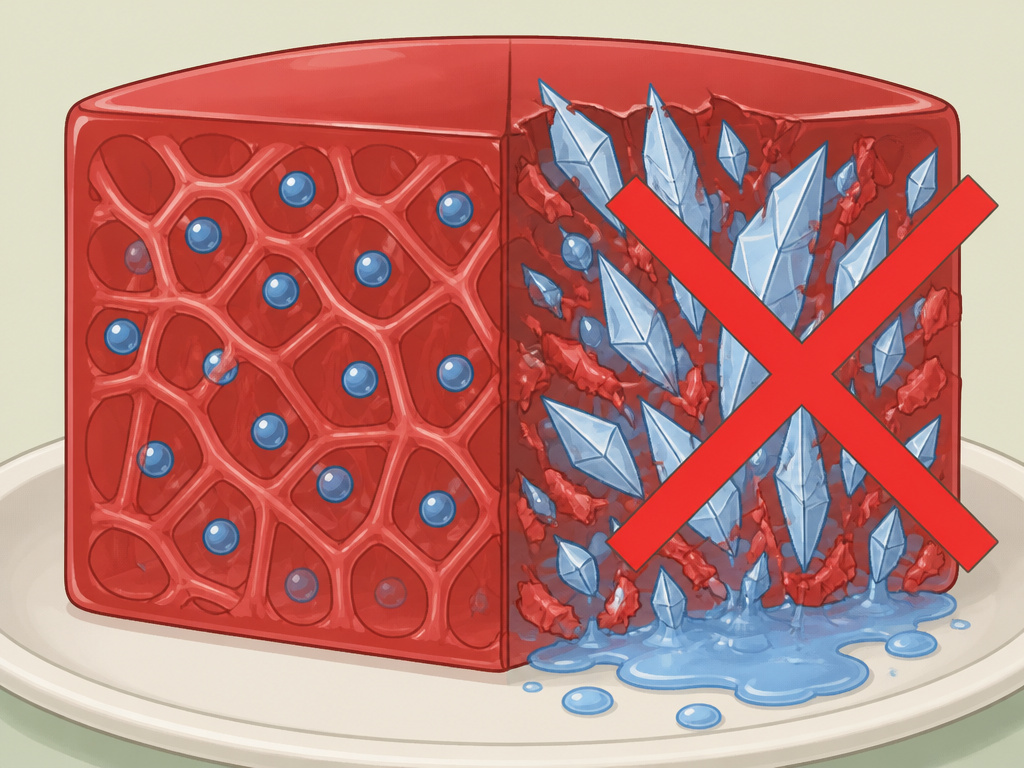
Gelatin works by forming a three-dimensional net of protein strands. This net traps water, sugar, and flavoring in billions of microscopic pockets. In the fridge, this structure is flexible but stable. In the freezer, the water inside those pockets turns to ice.
Ice crystals expand. They push against the delicate protein net, stretching and snapping the strands. Once this network is torn, it cannot re-form. When the Jello thaws, the damaged structure can’t hold all the liquid. Water weeps out, a process called syneresis, leaving you with a grainy, rubbery mass sitting in a puddle.
The GME gelatine FAQ page states it plainly: “Once prepared, gelatine should not be placed into the freezer… The mixture may become crumbly.” That’s the industry standard speaking.
Common mistake: Putting a warm bowl of liquid Jello straight into the freezer to speed up setting. The edges freeze solid into a block of ice while the center is still liquid. The result is an unusable, fractured mess with ice crystals across the top.
The texture shift is dramatic. Smooth and jiggly becomes grainy on the surface, rubbery in the middle, and watery at the bottom. Flavored or sugar-free mixes show the damage even more clearly. If your goal is classic Jello, the freezer is a hard no.
When Freezing Might Make Sense (And What You Get Instead)
 So the freezer wrecks traditional Jello. But it can create a different, intentionally icy treat. The key is to accept you’re making something new, not preserving the old.
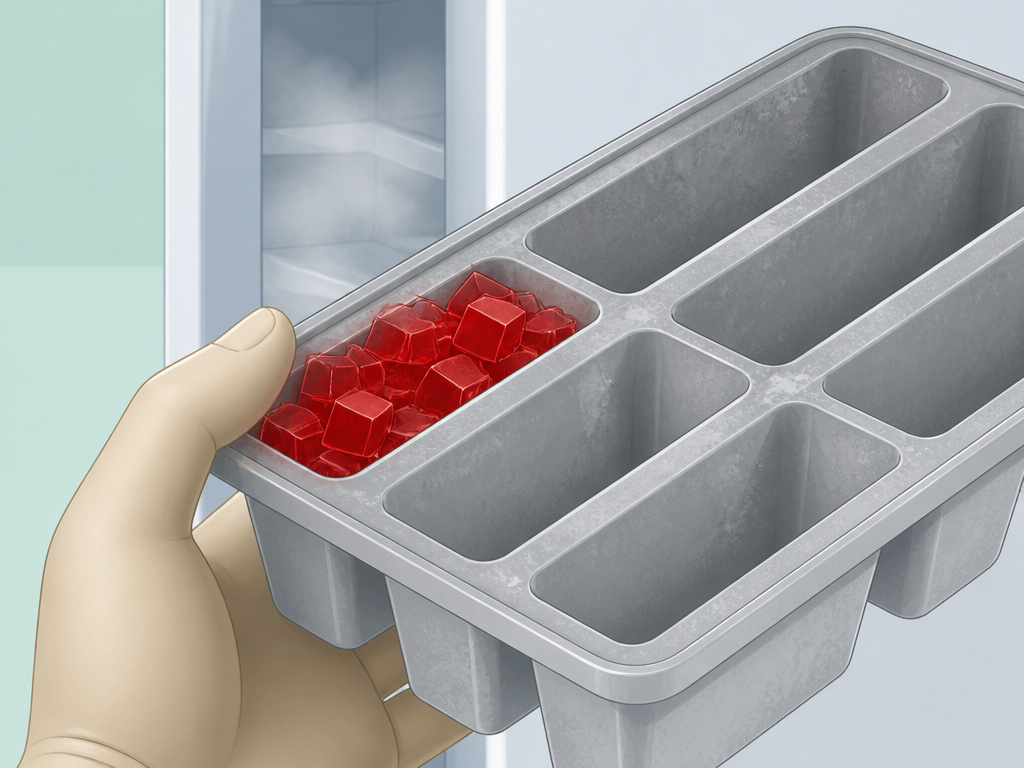
If you want a frozen snack, pour fully set, fridge-cold Jello into ice cube trays or popsicle molds. Freeze it solid. Eat it straight from the freezer. The texture is a crunchy, chewy ice, a distant cousin to the original, but some people enjoy it. These frozen cubes or pops are best eaten within 1–2 months before freezer burn sets in.
This approach works for freezing soup or freezing tomatoes too, you’re preserving food in a new state, not trying to keep its original form. Use sturdy, freezer-safe containers or heavy-duty freezer bags.
For Jello shots, the alcohol changes the game. High-proof liquor lowers the freezing point, so the shots may never get fully solid. They stay wiggly even in the freezer, which is fine since they’re meant to be eaten cold and soft.
Shelf Life: How Long Does Jello Actually Last?
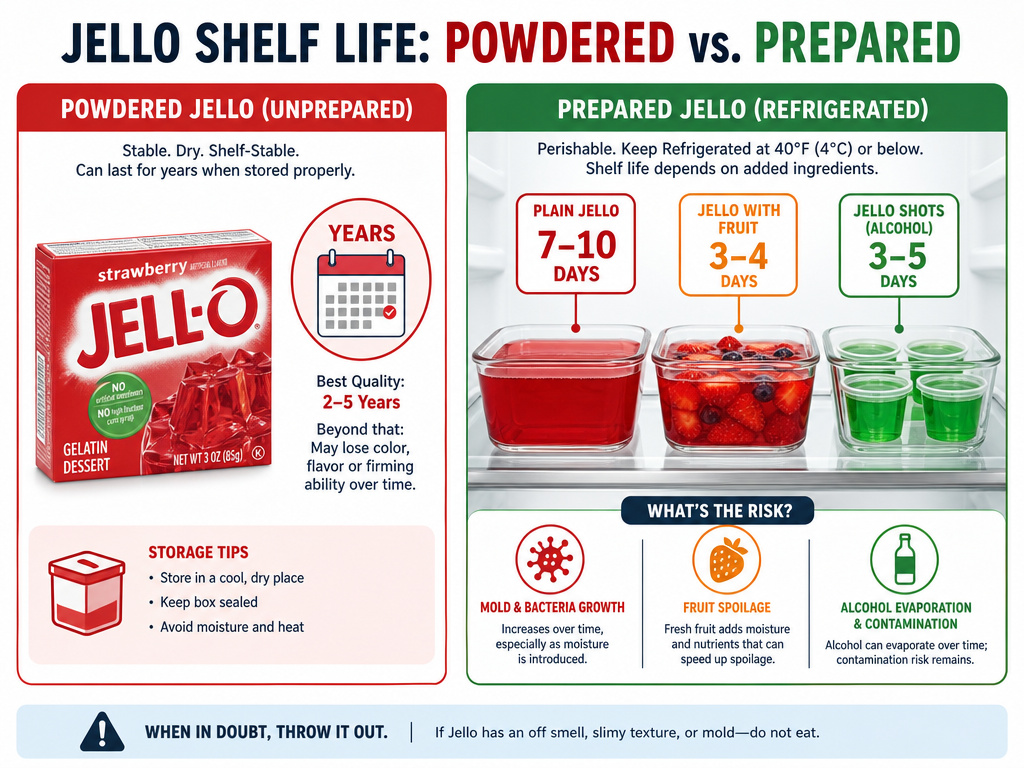 Jello isn’t immortal. Its shelf life splits into two distinct timelines: the powdered mix in the box and the prepared dessert in your fridge.
Unprepared Jello Powder: Sealed in its box, powdered gelatin is practically inert. It can last for years in a cool, dry pantry, people have used decades-old powder with success. Once opened, aim to use it within 3–4 months to prevent moisture clumping.
Prepared Jello: This is where the clock starts ticking. The introduction of water and sugar creates an environment where microbes can eventually grow.
| Jello Type | Shelf Life in Fridge | Key Risk Factor |
|---|---|---|
| Plain Jello (no fruit) | 7 – 10 days | Mold growth on surface, flavor absorption |
| Jello with fresh fruit | 3 – 4 days | Fruit spoilage accelerates overall decay |
| Jello shots (in glass) | 3 – 5 days | Alcohol is a preservative, but not a forever one |
Store all prepared Jello in a tightly sealed container. Glass is ideal because it doesn’t transfer odors and provides a stable temperature, much like when you’re considering freezing food in glass. Plastic works if it’s food-grade and seals well.
At room temperature, the safe window shrinks to about 4 hours. After that, you’re in the temperature “danger zone” where bacteria multiply rapidly. If it’s been out all night, toss it.
Signs of spoilage are visual and olfactory. Look for mold (fuzzy spots, usually white or green), an off smell, or excessive liquid separation. When in doubt, throw it out. The cost of a new box is trivial compared to the risk.
The Fruits That Fight Back (And How to Win)
Gelatin’s nemesis isn’t heat or ice, it’s a specific family of enzymes called proteases. These enzymes, found in certain raw fruits, digest protein. Since gelatin is a protein, they chop it into pieces too small to form a net.
The usual suspects are: * Fresh pineapple (contains bromelain) * Fresh kiwi (contains actinidin) * Fresh papaya (contains papain) * Fresh figs
If you add these fruits raw, your Jello will remain a sad, fruity soup no matter how long it chills. The fix is simple: use the canned or cooked version. The canning process uses high heat, which denatures and deactivates the enzymes. Canned pineapple works perfectly in Jello.
The same principle applies when you’re making freezer jam, you often cook the fruit first, which also neutralizes these enzymes and prevents texture issues later.
Frequently Asked Questions
Can you speed up Jello setting without the freezer?
Yes, but carefully. Dissolve the gelatin in hot water, then stir in ice-cold water (or a cup of ice) instead of just cold water. This brings the temperature down instantly. Pour it into a shallow pan (like a 9×13) instead of a deep mold to increase surface area. Then refrigerate. You might cut the time by a third.
Why did my Jello not set at all?
Three likely culprits: you used boiling liquid directly on the gelatin, you added raw pineapple/kiwi/papaya/figs, or you didn’t use enough gelatin for the volume of liquid. A standard packet (about 9 grams) sets about 2 cups (500 ml) of liquid. If you added extra juice or fruit, you may have diluted it beyond its capacity.
Can I freeze Jello as a long-term storage method?
No. Freezing is not a preservation method for Jello; it’s a texture-altering process. For long-term storage, keep the powdered mix in its box. Once prepared, the fridge is its only home.
How can I tell if my Jello has gone bad?
Look, smell, and feel. Visible mold, an off or fermented smell, or a slimy surface are clear signs. If the Jello has separated into a solid rubbery layer with a pool of liquid, it’s past its prime. When you’re unsure, the safest move is to discard it.
Is it okay to make Jello with milk or dairy?
Yes, it makes a creamier, opaque dessert often called “Jello fluff” or “creme.” The setting time may be slightly longer because dairy is denser than water. Ensure the dairy is cold when you mix it in to avoid curdling.
The Bottom Line
Jello belongs in the refrigerator, full stop. That’s where the gelatin sets correctly and keeps its wobbly, smooth texture for up to a week. The freezer is a tool for making a different frozen treat, not for preserving the classic dessert. Remember the four-hour fridge minimum, ban raw pineapple from the bowl, and store it covered. Follow those rules and your Jello will be the one that actually makes it to the table looking right.
