How to Store Celery to Keep It Crisp: Cold & Moist Methods
This post contains affiliate links. As an Amazon Associate, we earn from qualifying purchases.
To store celery and keep it crisp, you need three things: cold temperature (ideally 32°F/0°C), high humidity (95%), and isolation from ethylene gas. Wrap the whole, unwashed bunch tightly in aluminum foil and place it in the high-humidity crisper drawer. This method can keep celery fresh for 2 to 3 weeks. Storing it in the plastic bag it came in traps ethylene and turns stalks limp and rubbery within days.
That 32°F target isn’t a guess. It’s the published ideal from university agricultural extensions, where celery can last 2 to 3 months. Your home fridge isn’t a commercial cold room, but hitting the right conditions inside it is the difference between crisp stalks and a wasted bunch.
What follows is the mechanics behind that number, two proven storage methods ranked by longevity, and what to do when you need even more time. You’ll also learn why common mistakes, like leaving celery in its store bag, guarantee a disappointing result.
Key Takeaways
- The absolute best environment for celery is 32°F (0°C) with 95% relative humidity, as outlined in the University of Tennessee’s produce storage guide.
- Aluminum foil is superior to plastic wrap or bags because it retains moisture while allowing ethylene gas to escape, preventing rot and limpness.
- Celery both produces and is sensitive to ethylene gas; never store it sealed in plastic or near apples, avocados, or bananas.
- For pre-cut sticks, submerge them in a jar of fresh water in the fridge and change the water every other day for up to 2 weeks of crispness.
- Freezing is only for cooked dishes, as the high water content (about 95%) destroys the crisp texture upon thawing.
The Core Principle: Cold, Moist, and Isolated
Celery is about 95% water. Your entire storage strategy is a fight to keep that water inside the stalks. Lose the fight, and you get limp, rubbery, bitter celery. Win it, and you have a crisp, snappy vegetable for weeks.
The winning conditions aren’t a secret. They’re documented in academic food storage publications. The University of Tennessee produce storage guide and the UConn Food Safety storage guidelines both state the same specs: an ideal temperature of 32°F (0°C) and 95% relative humidity for a shelf-life of 2 to 3 months.
Celery requires cold and moist storage: 32°F (0°C) and 95% relative humidity. At this temperature and humidity, shelf-life is maximized at 2 to 3 months. Most home refrigerators are cold but dry, making additional moisture retention essential.
Your fridge’s crisper drawer is the first tool. If it has a humidity slider, set it to high. This creates a micro-environment that slows water loss. But the crisper alone isn’t enough for a vegetable this thirsty. You need a physical moisture barrier wrapped directly around the celery.
The second critical factor is ethylene gas. Celery produces this ripening hormone and is also sensitive to it. Trapping the gas around the celery—like in a sealed plastic bag—speeds up decay and softening. This is why you must remove it from the store packaging immediately. It’s also why you should keep celery away from high ethylene producers like apples, avocados, and bananas.
| Storage Factor | Ideal Condition | What Happens If Wrong |
|---|---|---|
| Temperature | 32°F (0°C) | Above 40°F: accelerates water loss and decay. Below 32°F: risk of freezing damage, causing cell walls to rupture and stalks to become mushy upon thawing. |
| Humidity | 95% Relative Humidity | Low humidity: stalks lose moisture, becoming limp and rubbery within 3-4 days. |
| Atmosphere | Ethylene-free, with airflow | Sealed in plastic: traps ethylene, accelerating spoilage and causing a bitter taste. |
Method 1: The Aluminum Foil Wrap (2-3 Weeks)
This is the default, no-prep method for a whole bunch of celery. It works because foil maintains a humid microclimate while still being permeable enough to let ethylene gas dissipate. You are essentially creating a miniature, optimized version of the crisper drawer.
Step 1: Unpack and Inspect
Take the celery out of the plastic supermarket bag immediately. If the bunch is tied with a rubber band or twist tie, you can leave it on. Give the base a quick glance. If it’s extremely dirty, you can rinse it, but you must dry it thoroughly with a towel afterward. Water left sitting on the stalks promotes rot.
Step 2: Wrap Tightly
Tear off a sheet of heavy-duty aluminum foil long enough to wrap the celery from top to bottom. Place the bunch in the center and fold the foil around it snugly, like a burrito. Don’t crush it, but ensure there are no large gaps. You do not need to seal the ends; leaving them open aids gas exchange.
Step 3: Crisper Drawer Placement
Put the foil-wrapped bundle in the high-humidity crisper drawer. Do not place heavy items on top of it. The foil protects the celery from the fridge’s dry, circulating air, and the crisper provides the cold, moist base environment.
Common mistake: Wrapping celery in plastic cling wrap or returning it to its original bag. Plastic traps every molecule of ethylene the celery produces, creating a ripening chamber. The stalks will turn limp and develop a bitter flavor at the ends within a week.
Why does this work so much better than plastic? The foil’s metal layer reflects the celery’s own moisture back onto its surface, maintaining humidity. Meanwhile, microscopic gaps in the foil wrapping allow the ethylene gas to slowly diffuse away. It’s a passive, nearly perfect system for home use.
Method 2: The Water Jar for Pre-Cut Sticks (Up to 2 Weeks)
Sometimes you need convenience. Pre-cutting celery into sticks for snacks or meal prep is smart, but it massively increases the surface area exposed to dry air. The water jar method counters this by putting the water loss fight on the offensive.
This method is similar to how you store fresh herbs like parsley or cilantro, but with a key difference: celery can handle full submersion.
- Trim and Cut: Cut the celery bunch into sticks of your desired length. There’s no need to peel them.
- Choose a Container: Select a tall, clean jar or airtight container that will allow the celery sticks to stand upright.
- Add Water: Place the sticks in the container and add enough cool, fresh water to submerge the cut ends by about an inch. The leafy tops should be well above the waterline.
- Cover and Chill: If using a jar, you can cover it loosely with its lid or plastic wrap. For a container, snap the lid on. Place it in the fridge, not necessarily in the crisper.
- Refresh the Water: This is the non-negotiable maintenance step. Change the water every other day. Stagnant water becomes a breeding ground for bacteria that will slim the celery and give it an off taste.
Why change the water so often? The celery leaches nutrients into the water, which bacteria love. Fresh water keeps the environment clean and continues to provide hydration through the cut ends. Sticks stored this way will remain remarkably crisp for up to two weeks, making it an excellent partner strategy if you also have carrots pre-cut for snacks.
What Not to Do: The Enemies of Crisp Celery
 Understanding what kills celery fast is as important as knowing how to save it. These are the practices that guarantee failure.
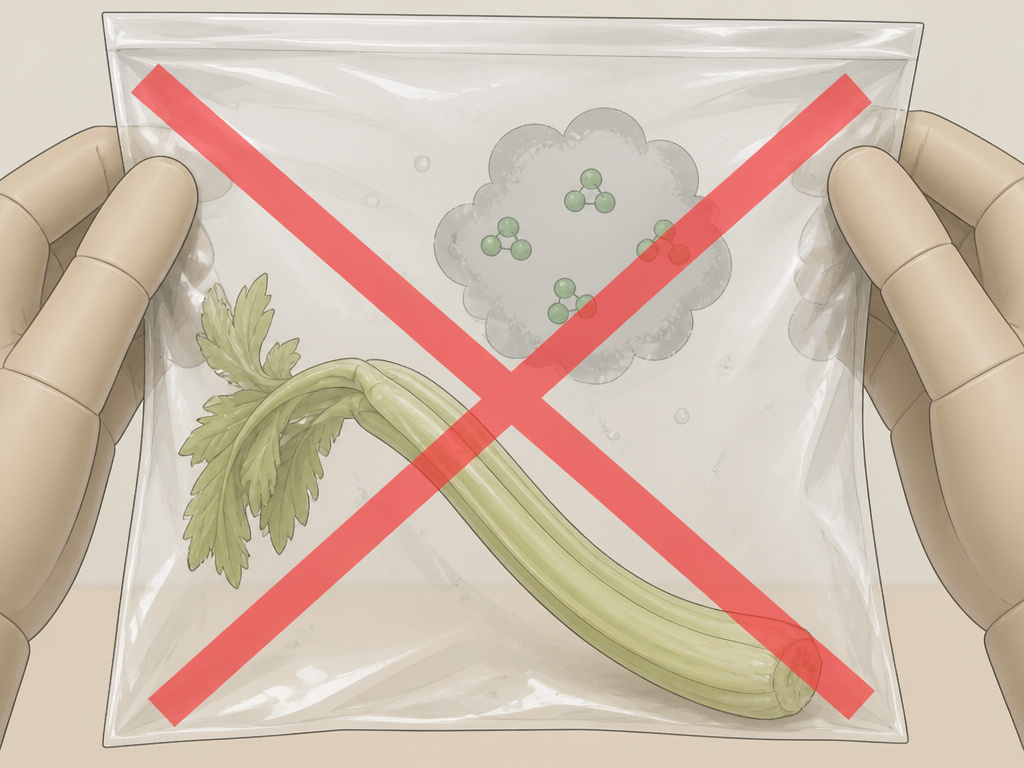
The Original Plastic Bag
This is the biggest offender. That perforated plastic bag is designed for store shelf life, not your fridge. It traps humidity unevenly and, most critically, bottles up ethylene gas. The celery essentially suffocates in its own ripening fumes. You’ll notice the inside of the bag gets foggy, the stalks turn bendy, and the ends start to brown and bitter.
The Warm Countertop
Celery is not an onion or a potato. Its high water content means it loses moisture rapidly at room temperature. Even a day on the counter can turn crisp stalks flabby. The only exception is if you’re trying to re-crisp already limp celery by standing it in water—and even then, it goes back in the fridge.
Washing Before Storage
Unlike ginger root or garlic, which you store dry, celery is moist. But adding more water is a risk. If you must wash it before storing, you have to dry it completely. Any droplets left in the crevices or between stalks become pockets for mold and bacterial growth. It’s safer to wash right before use.
Freezing for Raw Use
Because celery is 95% water, freezing ruptures its cell walls. When it thaws, all that water leaks out, leaving a mushy, stringy texture. Frozen celery has one purpose: to go directly into a cooked dish like soup, stew, or stock. For that, chop it, spread it on a tray to freeze individually, then bag it.
Long-Term & Specialty Storage
 Sometimes two or three weeks isn’t enough. If you have a garden bounty or bought in bulk, you have options that extend the timeline dramatically.
The Root Cellar Ideal
The academic 2-3 month shelf-life reference is for true cold, moist storage. If you have a root cellar, basement, or outdoor storage that maintains a steady temperature just above freezing (32-40°F) with very high humidity, you can store whole celery bunches upright in damp sand or sawdust. This is how you’d also store zucchini in the fridge for shorter periods, but celery’s structure allows for much longer.
Blanching and Freezing for Cooking
This is your only real “long-term” option for home storage beyond a few months.
- Wash and cut the celery into pieces sized for your typical recipes.
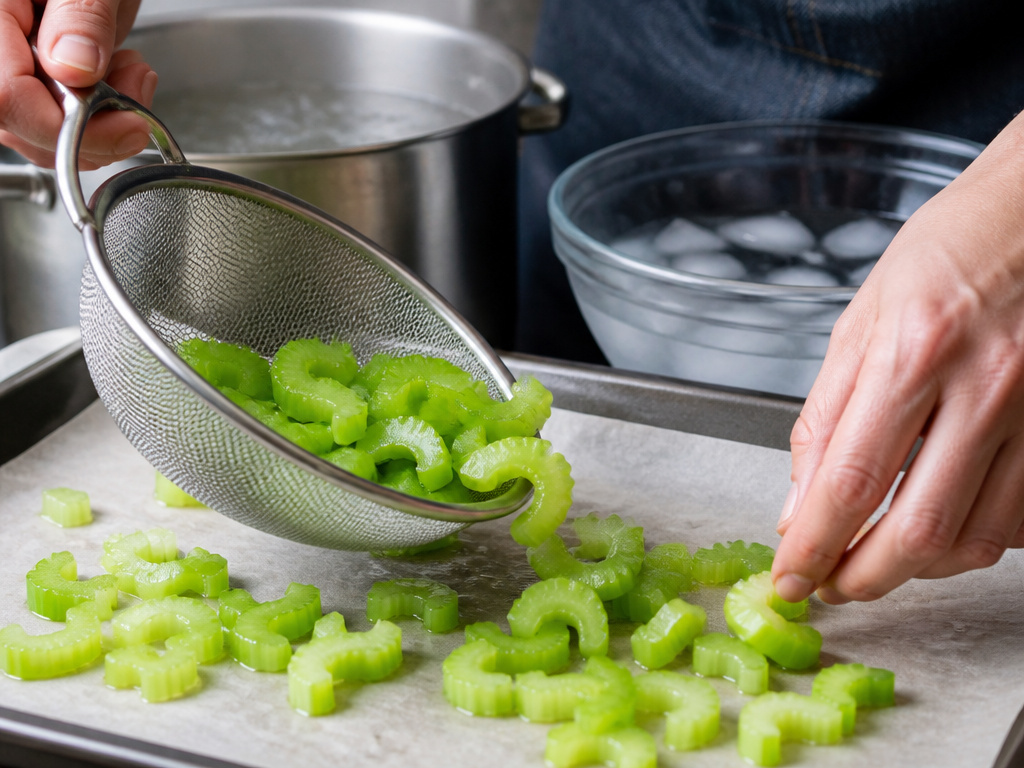
- Bring a large pot of water to a boil and prepare a bowl of ice water.
- Blanch the celery pieces in the boiling water for 3 minutes.
- Immediately plunge them into the ice water to stop the cooking.
- Drain thoroughly, pat dry, and spread on a parchment-lined tray to freeze solid.
- Transfer the frozen pieces to a airtight freezer bag or container.
Blanching deactivates the enzymes that cause loss of flavor, color, and texture during frozen storage. The result is celery that, while not crisp, retains good flavor and structure for adding to cooked dishes for up to a year.
Frequently Asked Questions
Can you store celery with the leaves on?
Yes, but it shortens the lifespan. The leaves wilt and decay faster than the stalks, and that decay can spread. For the longest crisp life, trim the leaves off and store them separately (they can be used like an herb, similar to fresh parsley) or compost them.
Why did my celery become hollow and spongy inside?
This is called pithiness. It’s usually caused by pre-harvest stress like uneven watering or temperature swings, meaning the celery likely had it when you bought it. Proper storage can’t reverse pithiness, but it can prevent further moisture loss that makes it more noticeable.
How do you revive limp celery?
If your celery has gone bendy but isn’t slimy or rotten, you can often re-crisp it. Trim a thin slice off the base, then stand the whole bunch or individual stalks in a container of ice water in the fridge for several hours or overnight. The stalks will absorb water and regain some, but not all, of their original snap.
Is it better to store celery whole or cut?
Always store it whole if you can. Cutting it exposes the interior to air and dramatically increases the rate of moisture loss. Pre-cut celery, even in water, has a shorter maximum shelf-life than a properly wrapped whole bunch.
Can you store celery near other vegetables?
Be strategic. Celery can be stored with other cold-loving, moisture-loving veggies like green onions or mint. However, keep it away from high-ethylene producers. Never store it in the same drawer as apples, avocados, bananas, or tomatoes if you want it to last.
The Bottom Line
Forget the plastic bag. The reliable path to crisp celery is aluminum foil and the cold, moist environment of your crisper drawer. That combination directly mimics the 32°F, 95% humidity standard that preserves celery for months on a commercial scale. For ready-to-eat sticks, the water jar method is a flawless backup.
Remember the two active failures: letting celery dry out or letting it stew in its own ethylene gas. Avoid those, and you’ll stop throwing away rubbery stalks. You’ll have crisp celery ready for snacks, soups, and salads for weeks on end.
